
Central Sierra: Red Twig Dogwood
Red Twig Dogwood: A Native Shrub of Beauty and Ecological Value
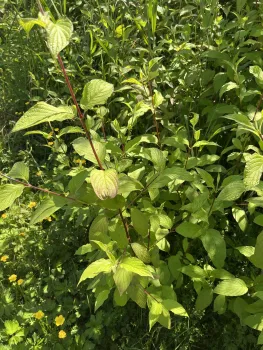
Red twig dogwood is one of the most recognizable native shrubs in the Lake Tahoe Basin. Also known as red osier dogwood, this deciduous shrub thrives in moist mountain environments and is valued for its vivid winter stems, ecological importance, and adaptability in restoration landscapes. Native throughout much of western North America, it naturally occurs along streams, wetlands, and seasonally moist meadows around Lake Tahoe. The shrub typically grows 6 to 10 feet tall and spreads both by underground rhizomes and by soil layering, allowing it to form dense colonies. Its most striking feature is the brilliant crimson bark visible during winter after leaf drop and less through the growing season. Young stems display the brightest coloration, especially when exposed to full sun. In spring and summer, red twig dogwood produces oval bright green leaves and clusters of creamy white flowers. By late summer, these flowers mature into white to bluish berries that attract numerous bird species.
The USDA Natural Resources Conservation Service describe red twig dogwood as an excellent erosion-control shrub because of its fibrous root system and tolerance for saturated soils. Around Lake Tahoe, it is commonly planted in riparian restoration projects to stabilize streambanks and improve watershed health.
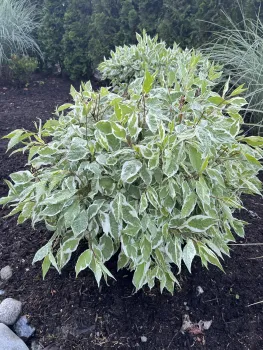
The species performs best in USDA hardiness zones 3 through 8, making it exceptionally suited to Tahoe’s cold winters and moderate summers. Care requirements are relatively simple, giving the shrub has low to moderate care needs. Red twig dogwood grows best in moist, organically rich soil and prefers full sun to partial shade. Although it tolerates occasional drought once established, prolonged dry conditions reduce stem color intensity and overall vigor. Supplemental irrigation may be necessary during dry Sierra Nevada summers, particularly for newly planted specimens and if planted in dry sites. Annual pruning is recommended to maintain vivid winter color; gardeners often remove one-third of the oldest stems each spring to encourage fresh red growth and to keep it from getting too leggy in appearance.
Wildlife value is one of the shrub’s greatest attributes. The berries provide food for songbirds, grouse, quail, small mammals and bears while dense thickets offer nesting habitat and cover. Deer and beavers browse the stems and foliage, and pollinators visit the flower clusters during early summer. In riparian systems around Lake Tahoe, red twig dogwood contributes significantly to biodiversity by creating protective habitat corridors for birds and aquatic species.
Indigenous peoples throughout the Sierra Nevada and Great Basin historically used red osier dogwood for practical and cultural purposes. Tribes including the Washoe Tribe of Nevada and California utilized the flexible stems in basketry, fish traps, and ceremonial items. The inner bark was sometimes combined with other plant materials in traditional smoking mixtures. Ethnobotanical studies also document medicinal uses of the bark and roots for treating fevers and minor ailments.
Today, red twig dogwood remains an outstanding ornamental and ecological shrub for mountain landscapes for its four-season interest, wildlife habitat and erosion control properties.