Brewed awakening: UC explores tea’s potential as ‘champion crop’ for California
UC ANR center to help optimize production of tea, which offers greater profit on less land
After 60 years of growing oranges, pistachios and grapes in Fresno County, Stan Ishii has seemingly seen it all.
But growing tea (Camellia sinensis) in the sun-drenched Central Valley? Now that was something different.
Curiosity inspired the octogenarian farmer and his wife Karen to join about 100 other attendees at Tea Day on March 19 at the University of California Kearney Research and Extension Center in Parlier.
“If they’re growing tea in this arid region, I was just wondering how that worked out,” said Ishii, who has been a regular green tea drinker since his youth. “I always assumed tea was grown in a more humid environment – like Southeast Asia and areas like that.”
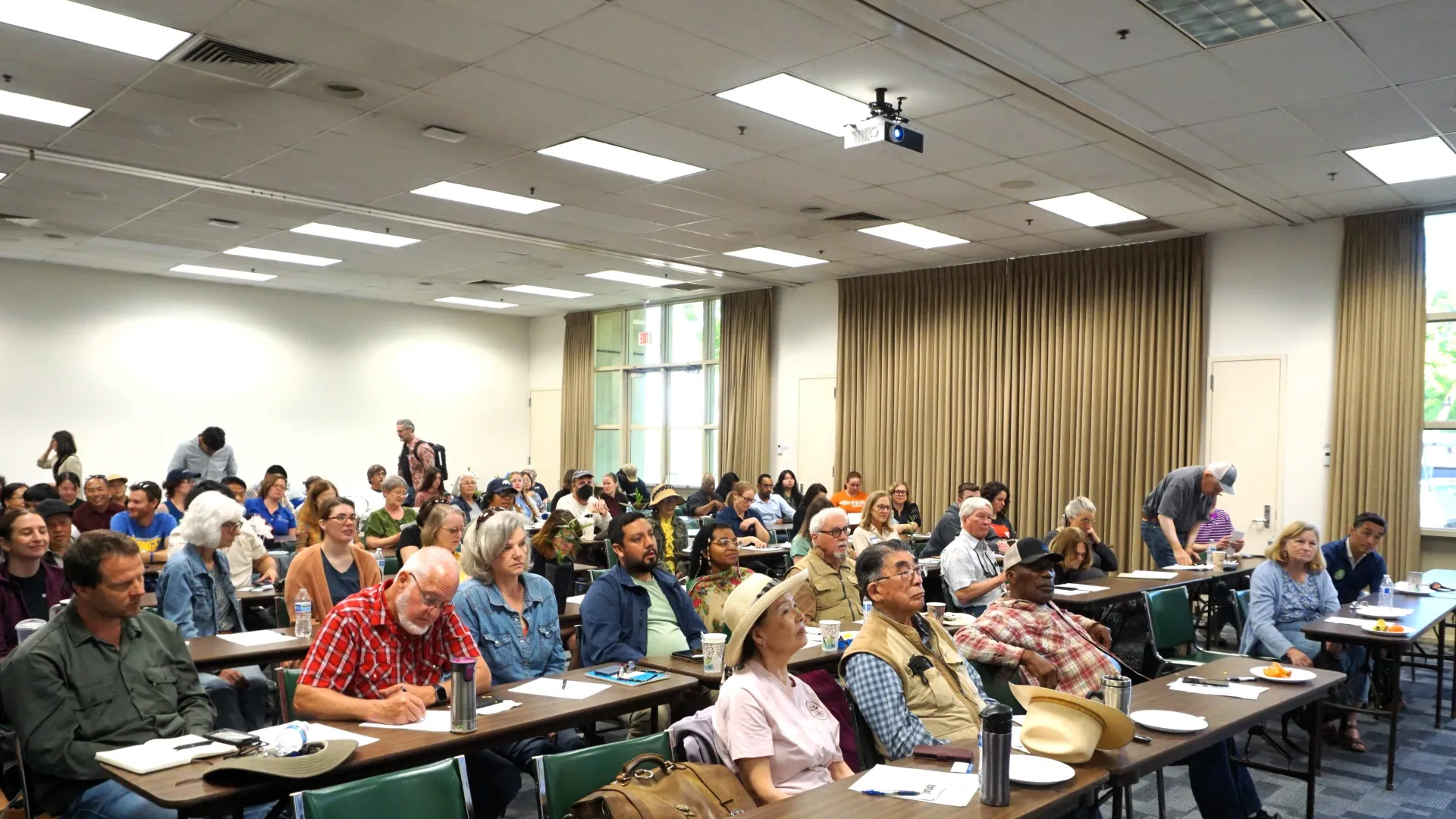
Every seat in the conference room was taken, as a diverse audience of growers, scientists, college and high school students and teachers, gardeners and other community members gathered to hear about the feasibility of tea production.
Atef Swelam, director of Kearney REC and West Side REC (both operated by UC Agriculture and Natural Resources), acknowledged the brewing interest in tea in the San Joaquin Valley and across the state.
“Tea could be one of the champion crops for the future of agriculture in California because it’s a high cash-value crop and a climate-resilient crop,” Swelam said. “We have found that tea is growing fantastically here under the Mediterranean climate of California.”
He envisions tea as part of the solution for growers who must make more profit with less land under the Sustainable Groundwater Management Act. The landmark law will be implemented in 2040, and an estimated 1 million acres of farmland (mostly in the Central Valley) will be retired. Growing tea – especially premium teas – could help keep farms afloat.
“According to some statistics in the literature, tea can produce revenue, on the same acreage, five times to 15 times that of traditional crops,” said Swelam. For almonds the difference is even greater; just five acres of tea could generate revenue equivalent to a 100-acre almond orchard.
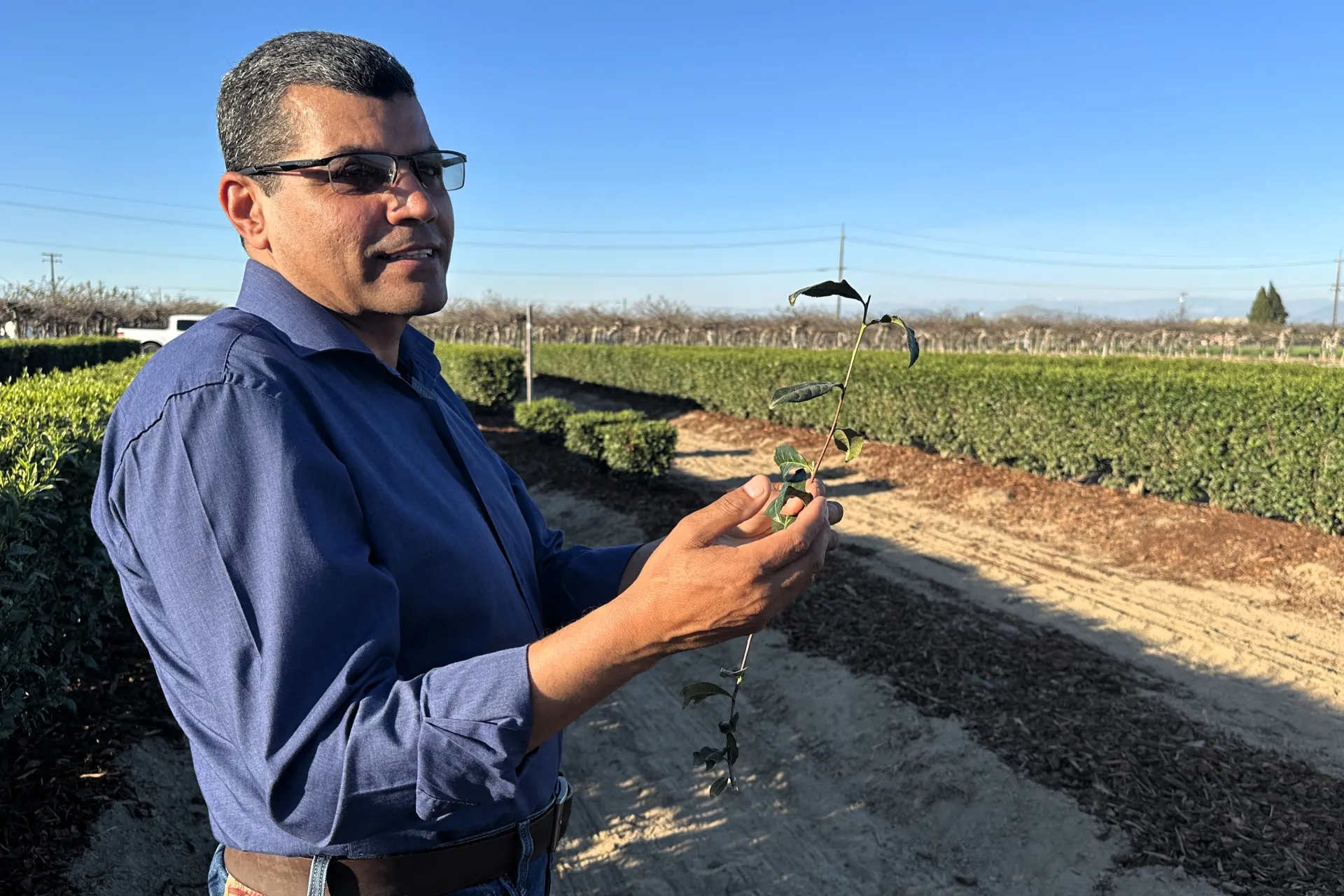
Tea Day attendees also heard about the immense market for tea, the second-most popular beverage in the world behind water.
“In the U.S., about 160 million people drink tea – almost half of the population – so that means it has huge potential here,” Swelam said. “And yet it’s not grown domestically; the United States imports about $6 billion worth of tea annually.”
Central Valley conditions well-suited for tea cultivation?
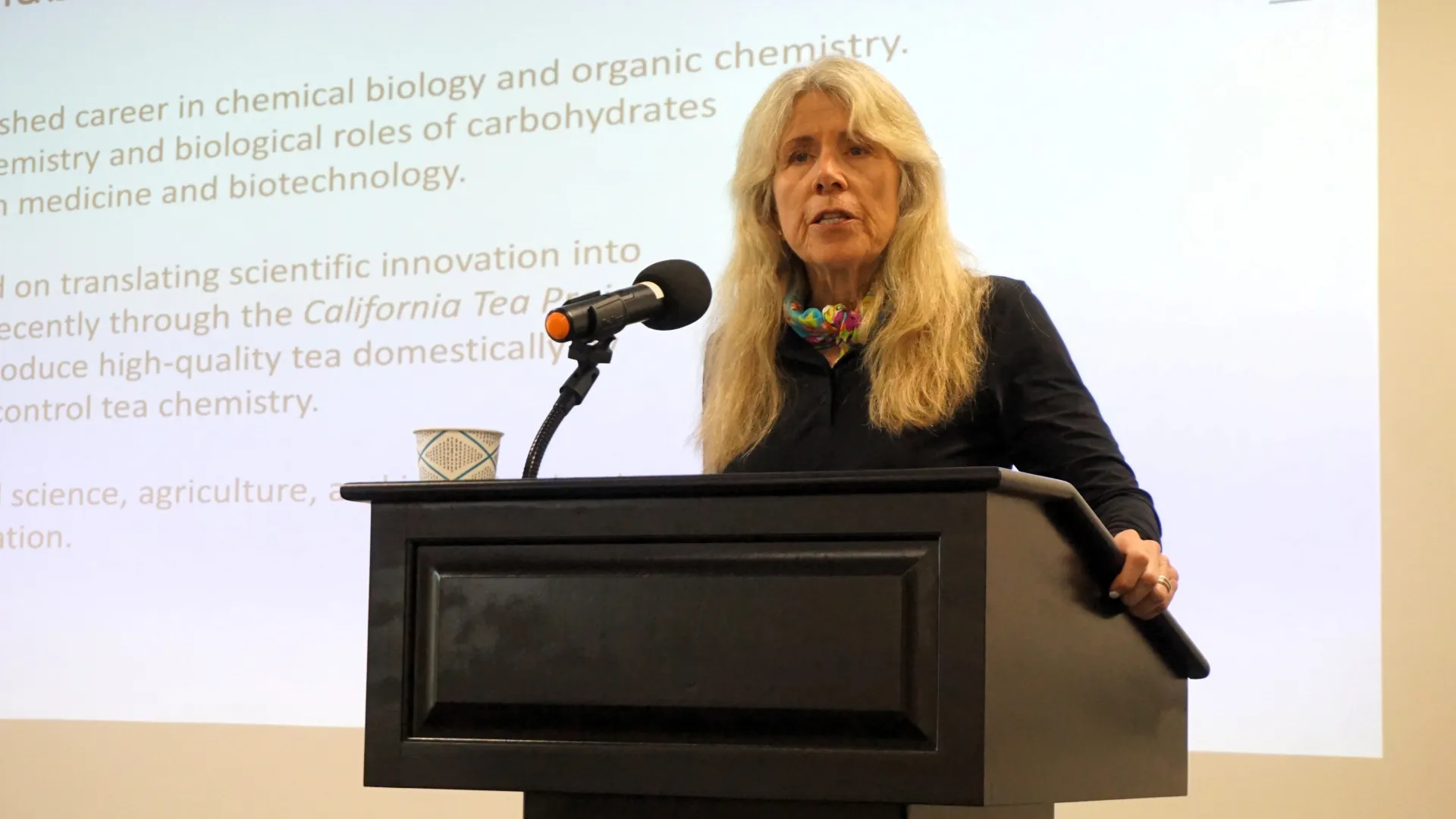
At Tea Day, attendees first heard from Parlier Mayor Alma Beltran and UC Davis Global Tea Institute Director Katharine Burnett. Then UC Davis researcher Jacquelyn Gervay-Hague introduced the history of tea at Kearney REC.
In the 1960s, tea giant Lipton funded a research project overseen by UC Davis professor Karl Ingebretsen. He identified several cultivars that could thrive in the Central Valley environment.
“There’s no question, from the varieties that were selected, that tea can grow quite well here in California,” said Gervay-Hague, professor emerita in the Department of Chemistry.
The Lipton study ended in 1980, but tea research was rekindled in 2017 when Gervay-Hague planted clonal cuttings to study chemical changes in tea plants. By growing tea at Kearney with the latest technologies and techniques, she identified standout cultivars among 21 tested varieties. She also developed some best practices, which she shared with the Tea Day audience.
Whereas scientists in the 1960s thought they needed to create humid conditions for tea plants by applying large quantities of water, Gervay-Hague said that tea can thrive just with drip irrigation. And, surprisingly, California’s consistently dry conditions are actually conducive to growing and harvesting tea.
“In other parts of the world, too much rain can really destroy the tea plants; you also have to pick the tea at a time when leaves are not too damp,” Gervay-Hague explained. “So the fact that we live in a dry climate, we have plants that prosper here.”
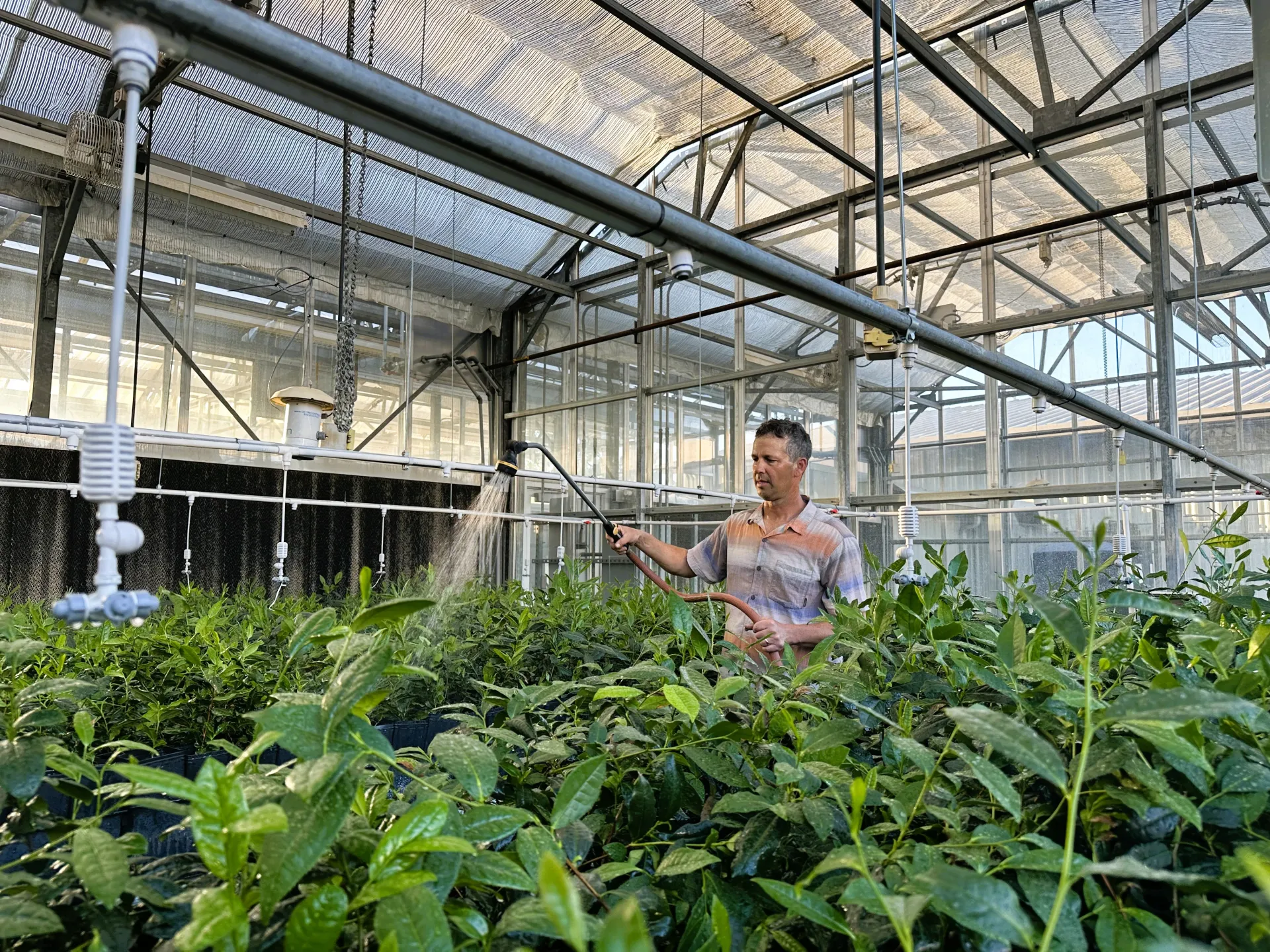
More proof can be found at Redwood Tea Estate, arguably the most successful commercial tea-growing operation in California. During an interview at his Stockton area tea farm, owner Patrick Sunbury said the arid conditions offer another advantage.
“We don’t have to use fungicides because of the dry climate, which is a great boost for us –a lot of tea growers in other parts of the world have to use large amounts of fungicide,” said Sunbury, who added that the caffeine in tea also serves as a natural pest deterrent.
Furthermore, the relentless sunshine and significant day-night temperature swings put beneficial “stress” on the tea, resulting in more distinctive aroma and flavor. That plant stress is why high-altitude environments across Asia produce some of the most prized teas in the world.
Case study of California tea suggests profit potential on small acreage
The premium tea market is where Sunbury found his niche. A landscape architect by trade, Sunbury was diagnosed with a neurological condition that prevented him from working long hours on a computer. Instead, he sought a way to make a living by growing crops on a small half-acre plot of family land.
He decided on tea – even though he never drank the beverage before becoming a tea grower. On Feb. 14, 2020, Sunbury planted his first plants, each only six to 12 inches tall, and strived to adhere to agroforestry practices incorporating native beneficial plants and insects that offset pest pressure.
“The hard part is that there isn’t any guidance; if you want to plant grapes, you can go to a UC Cooperative Extension advisor and they can tell you which cultivars you want, how to arrange the field, what amendments to provide,” Sunbury said. “But this is something where there’s no infrastructure built up, and not really much of a knowledge base.”
Through trial and error and close attention to his tea plants, Sunbury grew them to tabletop height and had his first harvests in 2024. He plucks only the young, tender tips – “two leaves and a bud” – every time they emerge, from first flush in April to the last in October.
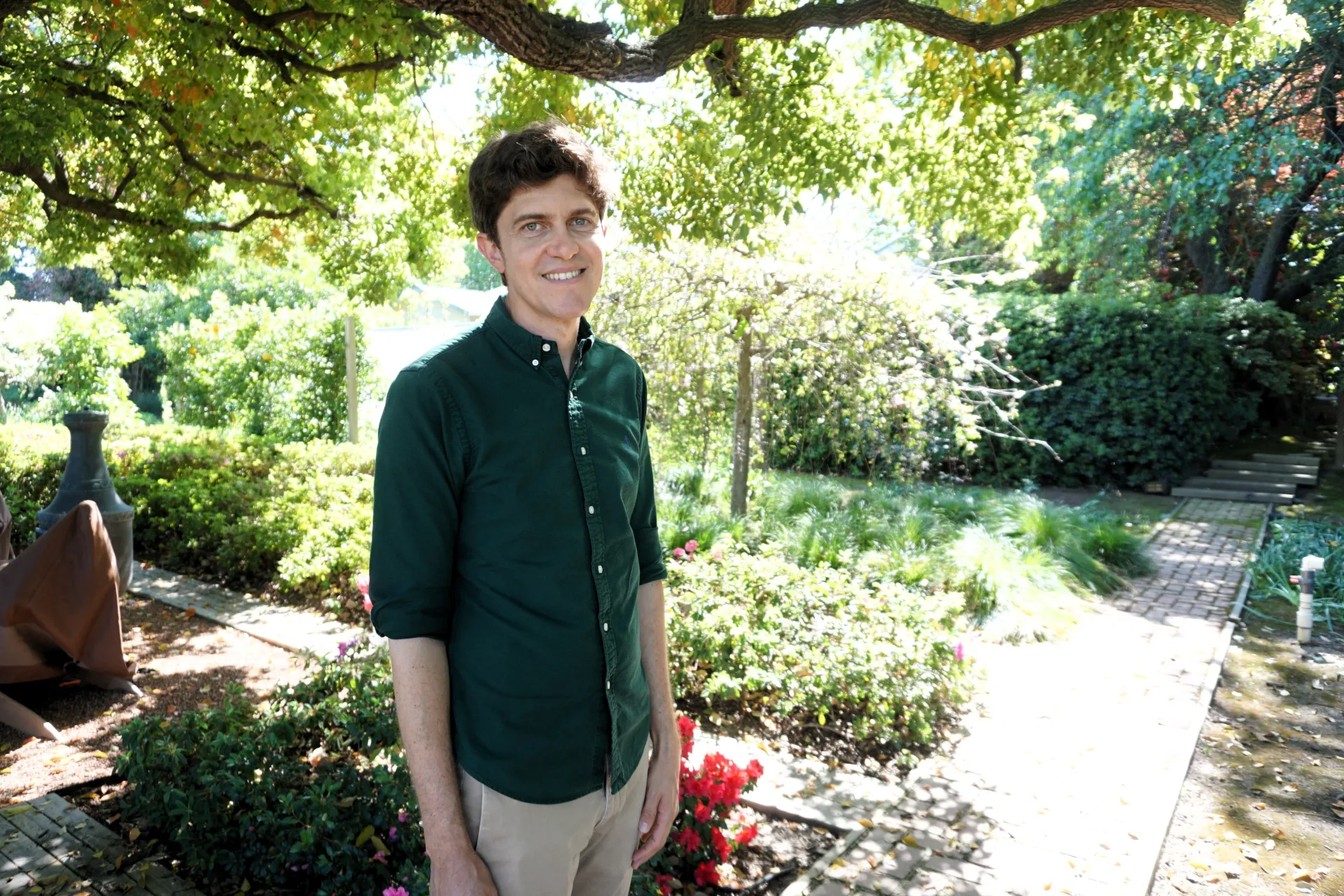
In the intervening years, Sunbury has identified the cultivars best suited for his specific terroir and established his own off-site processing facility where he can make white, green, oolong and black tea. The different types of tea – all from the same plant, Camillia sinensis – fall on a spectrum of oxidation, with green at zero percent oxidation, black tea at 100%, and white and oolong at percentages in between.
Customers can sample that range of teas by becoming members of Sunbury’s tea club – similar to a wine club – through which he makes “a large proportion” of his sales (customers also can purchase tea directly from his website).
“We are one of the few domestic tea farms to offer a club,” he said. “People on a quarterly basis will receive four 1-ounce bags of tea that we grow here on the farm. We meet other customers through festivals and events held throughout the year in California, such as the Terra Madre festival and San Francisco International Tea Festival.”
As he continues to experiment with different cultivars and processing techniques, Sunbury is also expanding beyond his half-acre “mother plot” outside of Stockton. By the end of the year, he aims to have three more acres planted in the Lodi area. There, he will once again begin the cycle of adaptation and adjustment until those plants are established.
“Tea can be a relatively finicky plant,” he suggested, when asked for advice to new tea growers. “Just go at it with a little bit of patience and perception; make sure that you are going to start on a smaller scale, and then expand gradually as you learn these lessons.”
Demand for tea could grow through cultural, generational change
On top of high initial setup costs, another challenge for making tea profitable at scale is the limited demand for high-end tea. While American coffee palates have become more sophisticated over the last few decades, mass market tastes in tea are still immature, according to Sunbury.
“We’re still in the ‘Folger’s/Taster’s Choice/Yuban’ stage of tea drinking, where people are having very low-quality powderized teas,” he said, noting that all parts of a tea plant may be shredded and pulverized to fill those familiar tea bags. He added that using older leaves and harsh processing techniques are detrimental to flavor.
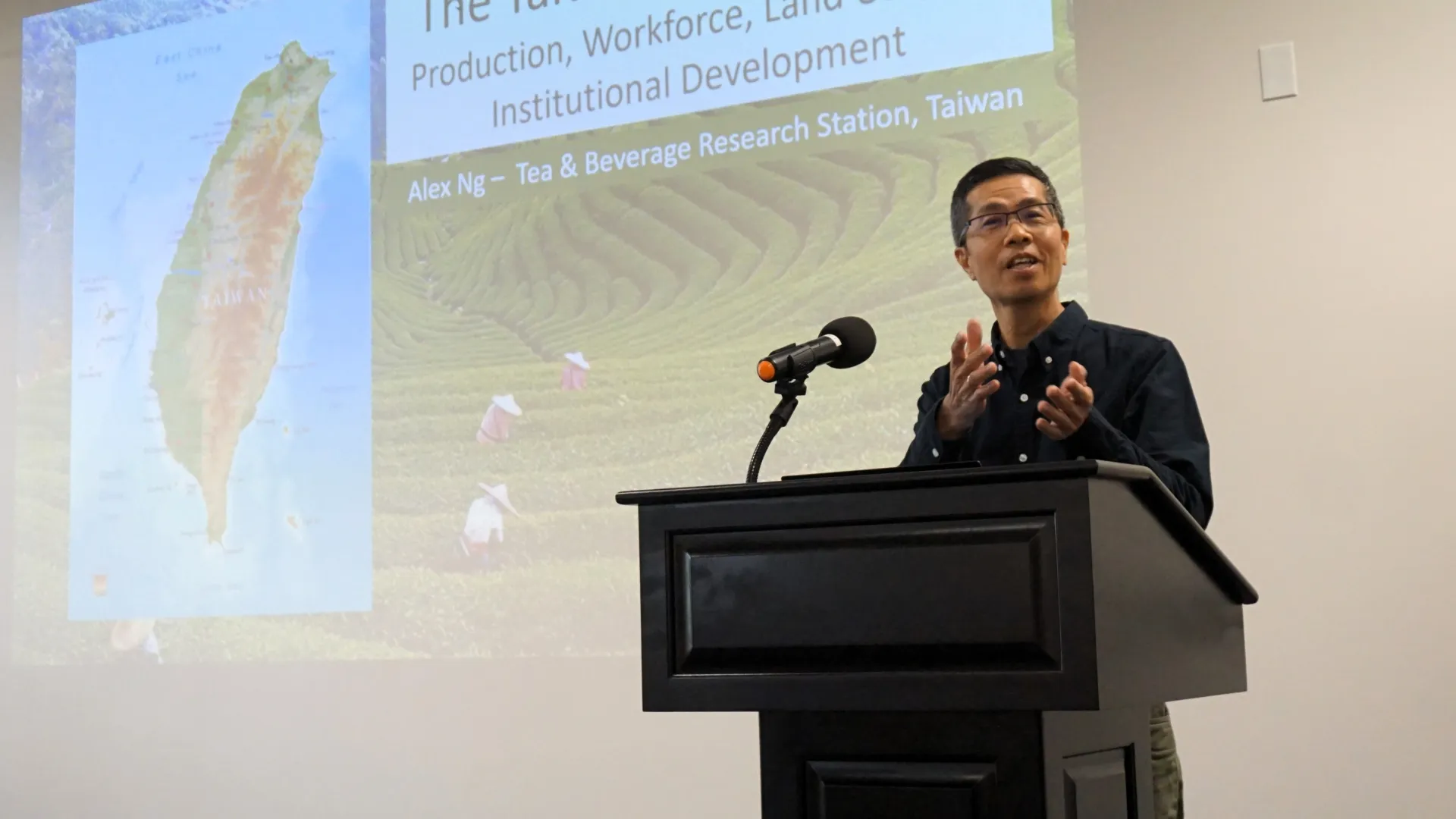
Moving to premium looseleaf tea will be a major cultural shift. Back at Tea Day, Alex Ng – a lecturer in the College of Agriculture and Natural Resources of National Chung Hsing University in Taiwan – discussed the roots of tea culture and the evolution of the tea industry on the island. Ng said the domestic market in the U.S. would be well-served by deepening cultural appreciation for tea.
“Tea brings people together; when you enjoy it, you always want to enjoy it with your friends and family,” Ng said. “In Taiwan, we believe that tea is more than a beverage – there is a lot of cultural significance in it: how do you incorporate tea into your social behavior, in your daily life? That’s very important.”
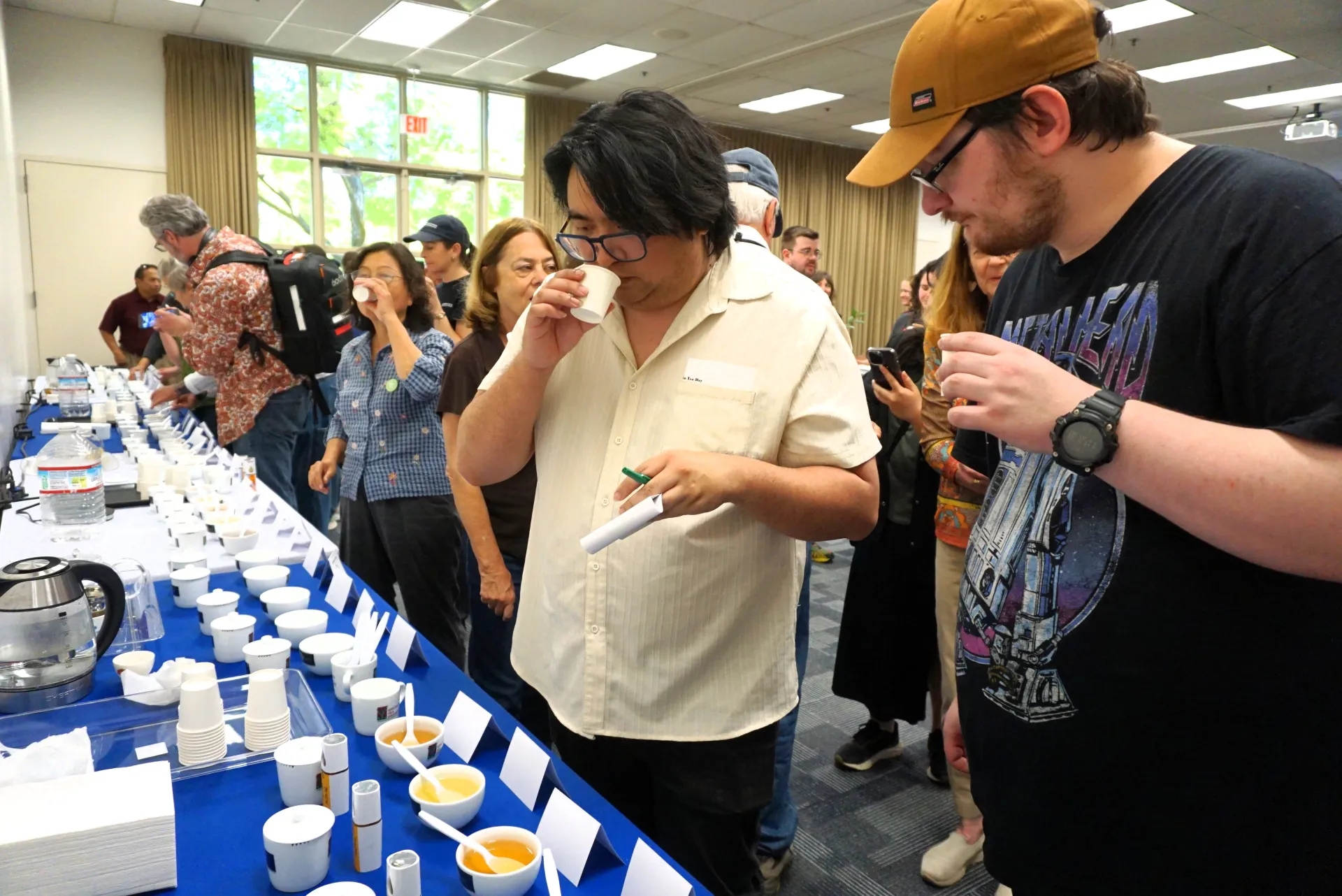
A “certified tea artist,” Ng explained to Tea Day participants how to use all five senses to savor the drinking experience, and then the attendees sampled a variety of teas from Taiwan and California. One participant, Fresno City College student Eleni Deamant, appreciated both the flavor and health benefits of tea.
Contemplating a career in nutrition, Deamant said she sees tea as the next stage of a broader generational shift in beverage preferences from sugary sodas to coffee and other alternatives.
“I think tea is going to become popular in the new generation,” Deamant said. “Not only is bubble tea very popular, but now matcha has become trendy and absorbed into the younger generation’s vocabulary and tastes a little bit…and I hope to see white tea or oolong tea be more absorbed into the younger generation’s tea culture in the U.S.”
Another Tea Day attendee, Sue Ruiz, said the health benefits of tea present a marketing opportunity to grow demand.
“Didn’t they do that with the pomegranate and pistachios? Look how big those industries are – and it was coming from the health perspective,” Ruiz said. “So why can't we do that with tea?”
Labor a potential barrier to growing tea at scale
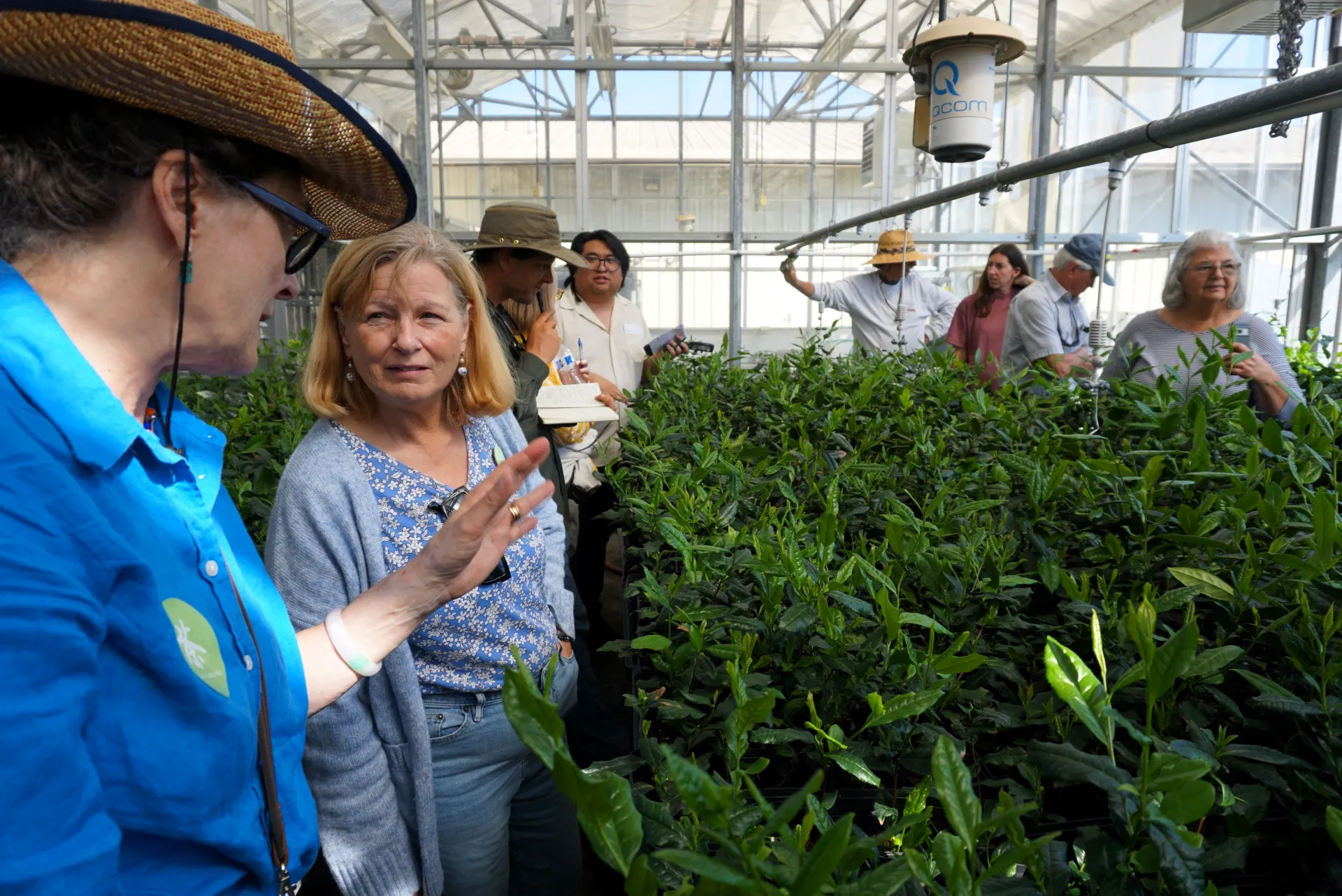
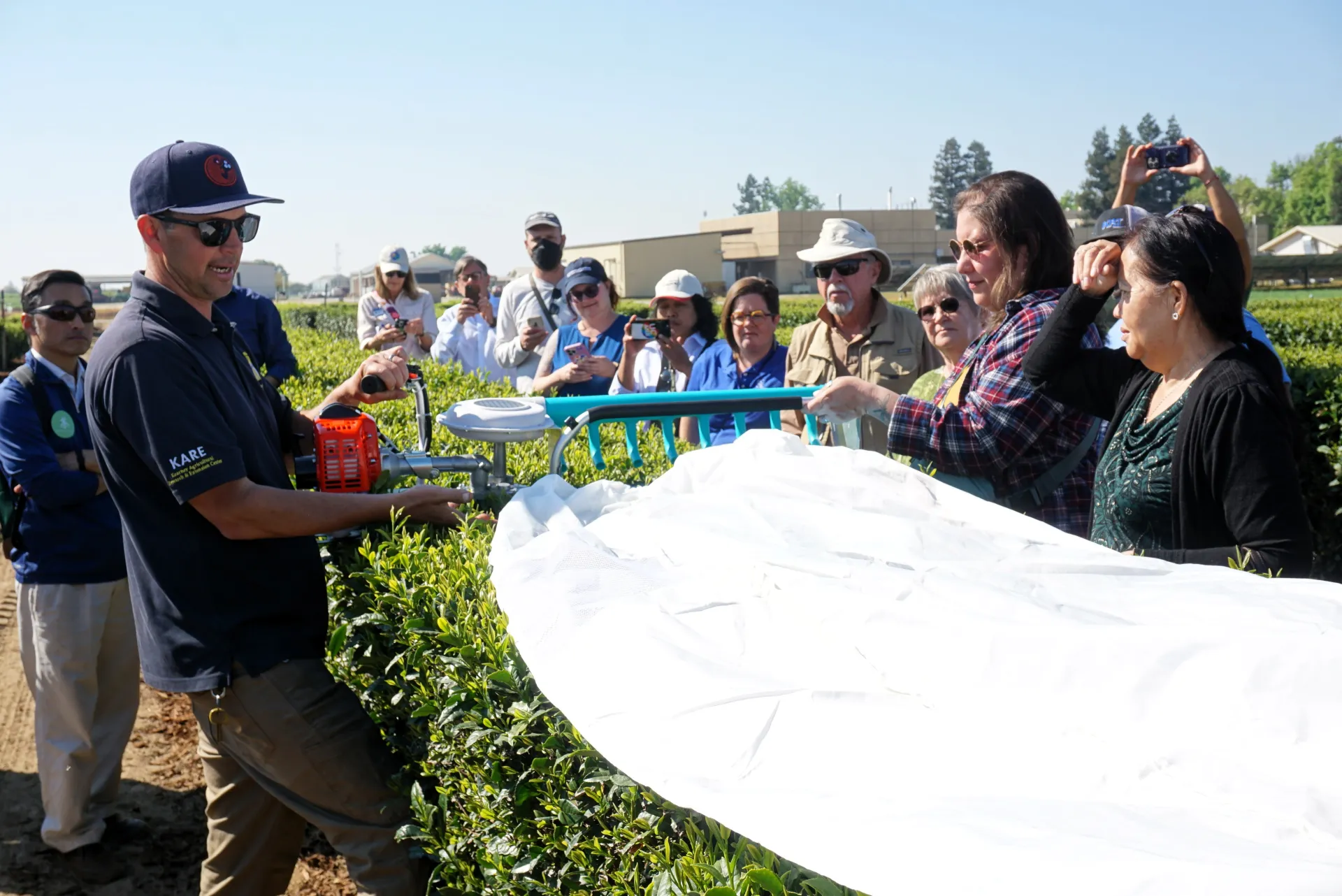
Tea Day participants also visited the greenhouse where potted tea plants are prepared for the field, as well as the quarter-acre plot where neat rows of 21 different cultivars are now well-established and ready for harvest. Ryan Puckett, Kearney REC staff research associate, showed the crowd a newly purchased handheld tea harvester, a hedge trimmer-like device that could save time for a grower.
Intensive labor requirements represent a major cost in producing high-quality tea. In her experience, Gervay-Hague said the most time-consuming task is the harvest of the leaf, with a skilled worker taking an hour to collect a pound of prime leaf (which produces only a quarter pound of dry tea).
“So you can just do the math and understand the economics,” she said. “That, to me, is one of the biggest challenges in terms of production of the tea plants.”
Gervay-Hague sees the current lack of tea-production infrastructure in California to be an opportunity. Cutting-edge techniques can be applied to that relatively clean slate to make harvesting and processing as streamlined and profitable as possible.
“We can start from scratch using technology from today,” she explained. “That’s what is going to be needed for us to really have a vibrant tea industry here.”
Analyzing the costs and benefits of mechanization versus hand-picking will be key. Swelam said Anderson Safre, a UC Cooperative Extension specialist in agricultural technology and innovation at Kearney REC, will be studying how to incorporate the latest ag tech into tea production systems.
In addition, Swelam said Ahmed Ayoub, a UCCE water resources advisor based at Kearney REC, will research the most efficient approaches to irrigation.
Water requirements for tea production top research questions
Water needs, of course, are a paramount concern in the Central Valley.
“Because of our changing environmental conditions, we’re not getting the snow and rain like we used to,” said Ishii, the longtime grower.
Ishii’s questions on irrigation requirements for tea were echoed by Sue Ruiz, a Fresno area resident who works on rural economic development issues. Ruiz said she was intrigued by the idea of tea as an “alternative crop” for Valley growers, especially small farmers.
“We don’t have enough viable crops for them to grow that we know take less water,” Ruiz said. “And if they are priced out of this just because of water, then they can’t provide a life for themselves.”
Ruiz was interested in how a blossoming tea industry could create jobs and other entrepreneurial opportunities.
“Does it have the potential? It sounds like it does,” she said. “The bottom line is going to be the dollar – it’s going to be the dollar for the farmer, for the landowner, for the producer, and for the community people.”
Just as Ruiz hopes the UC can provide economic analyses and practical insights on this new crop, Sunbury – the established grower – would like the university to focus more on tea research. Specifically, he is seeking insights on the chemical breakdown of California tea, as well as hardier cultivars that can withstand the state’s intense summer heat waves.
“We had to do our own breeding program and testing to try to find cultivars that can survive our climate,” he said.
Scientific and consumer interest tea continues to brew
At Kearney REC, the 1,000 tea plants in the field and 3,000 in the greenhouses have done so well that Swelam is planning to plant another 1.5 acres with tea. He will work with UC ANR researchers to test a host of different variables to determine the optimal soil conditions, irrigation practices, disease and pest management strategies, and mechanization of tea cultivation.
Ng, the visiting scholar from Taiwan, said he is heartened that the UC is turning its focus to tea.
“The UC system has a lot of experience in developing different kinds of agricultural products like wine, beer and coffee,” he said. “It just makes a lot of sense to use their resources to develop tea to meet the market in the U.S.”
In that vein, Gervay-Hague highlighted the pioneering work of Jean-Xavier Guinard, a UC Davis sensory scientist in the Department of Food Science and Technology. Guinard developed a vocabulary for the spectrum of flavors and aromas for wine and coffee, and his research team is now working on a “flavor wheel” for tea.
Sunbury has already seen firsthand the fervent enthusiasm of tea connoisseurs. Many of his tea club subscribers also visit the farm, where Sunbury offers educational tours to members and the general public. Even without any advertising, he said there has been “high demand” for those programs.
“There are people who are lifetime tea drinkers and tea’s a really passionate part of their life…and unless they’re able to spend thousands of dollars and get a translator to go to Asia, they have no way to connect with a tea farmer and with tea in general,” Sunbury said. “So having our tea farm here, we’re able to welcome guests for tours and show them how tea is grown and they can learn more about the product.”