
Verticillium Wilt Increased in Lettuce This Spring and Rotation Crops Update
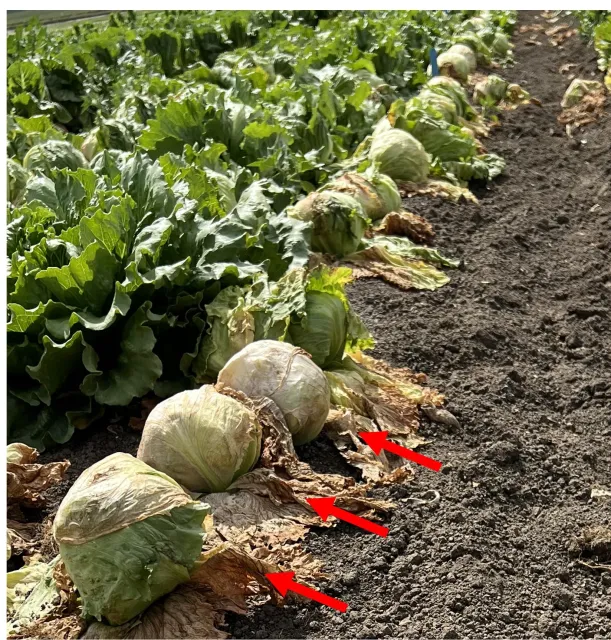
Lettuce Verticillium wilt, caused by the soilborne fungus Verticillium dahliae, continues to threaten lettuce production in the Salinas Valley. Symptoms of Verticillium wilt include lower leaf yellowing, wilting, and eventual plant collapse, which typically develop near crop maturity (Figure 1). With the delayed harvests associated with the unusually warm winter this season, losses caused by Verticillium wilt increased this spring, as disease symptoms had more time to develop before harvest.
Rotation crops update
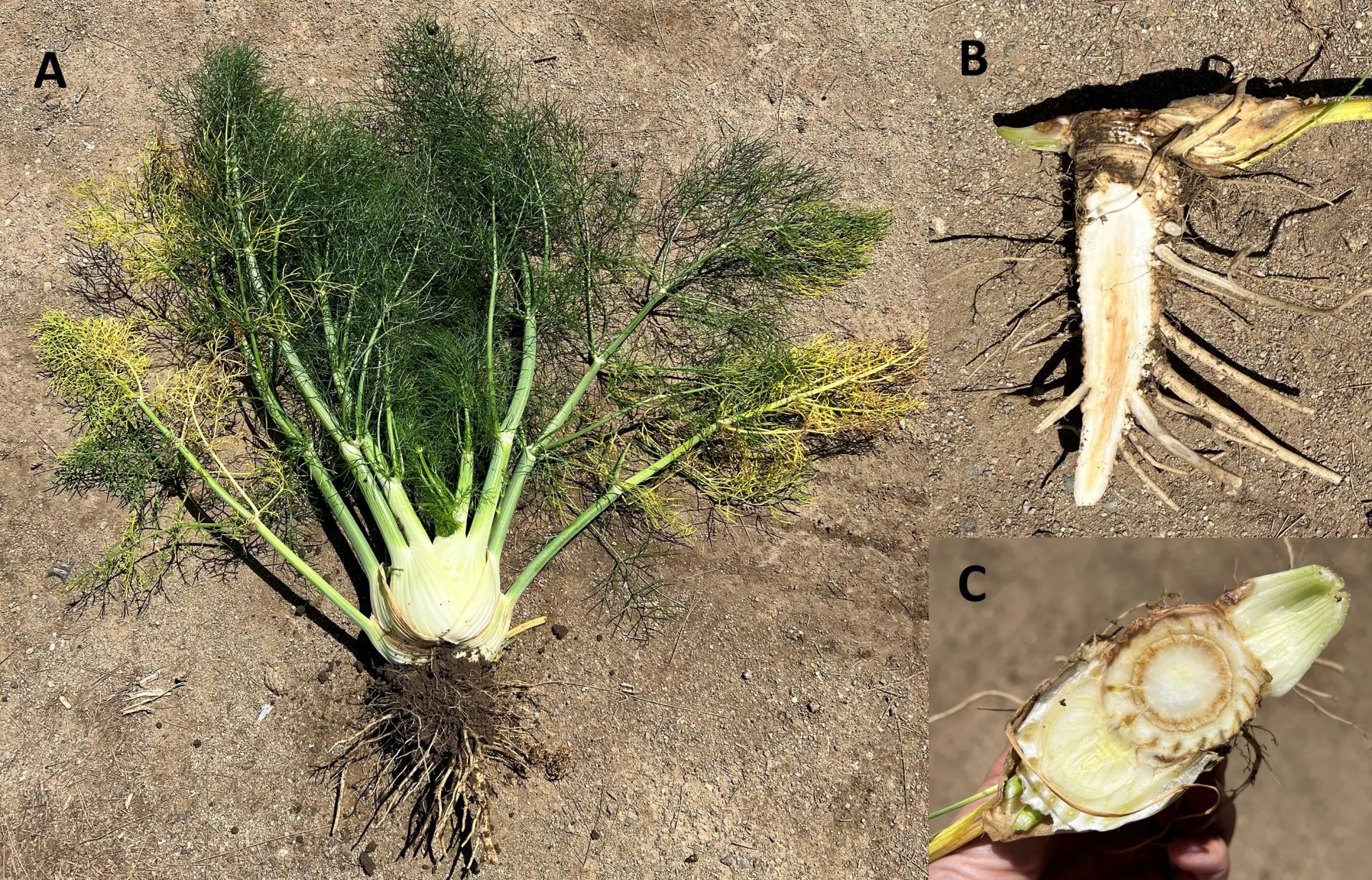
Although using resistant or tolerant varieties remains one of the primary strategies for managing the Verticillium wilt, crop rotation also plays an important role in disease management. By planting non-host crops over time, crop rotation interrupts the disease cycle of the pathogens and reduces the buildup of pathogens that survive in soil and crop residues. Effective crop rotation programs depend on understanding the pathogen host range. In general, crops within the same family are genetically related and may share susceptibility to similar pathogens. However, Verticillium dahliae has a very wide host range among many economically important vegetable and field crops. Table 1 summarizes recently reported host and non-host or poor-host of cool-season vegetables and field crops of Verticillium dahliae. Notably, fennel is a newly confirmed and the first documented host within the Apiaceae family (1). Verticillium wilt has been confirmed on several fennel plantings in the Salinas Valley in recent years (Figure 2).
Reminder on disease history record keeping
Soilborne pathogens such as Verticillium dahliae can persist in the soil for many years by surviving on plant debris, infected roots, or specialized survival structures. Maintaining accurate records of soilborne pathogen history is therefore especially important. Information on previous disease history can help guide management decisions, including crop rotation planning, variety selection, and so on.
Table 1. Recently reported host and non-host cool-season vegetables and field crops of Verticillium dahliae
Host and susceptible | Non-host or poor-host |
Lettuce (Asteraceae) | Celery (Apiaceae) |
Artichoke (Asteraceae) | Cilantro (Apiaceae) |
Spinach (Amaranthaceae) | Parsley (Apiaceae) |
Fennel (Apiaceae) | Broccoli (Brassicaceae) |
Cabbage (Brassicaceae) | Pea (Fabaceae) |
Cauliflower (Brassicaceae) | Bean (Fabaceae) |
Strawberry (Rosaceae) | Corn |
Chickpeas (Fabaceae) | Rye, Wheat |
Favabean (Fabaceae) | |
Many Cucurbits | |
Many Solanaceae | |
Mint |
Literature cited
(1) Koike, S.T., Stanghellini, H., and Rashidi, M. 2025. First report of worldwide of Verticillium wilt of fennel caused by Verticillium dahliae. Plant Disease 109:2610.