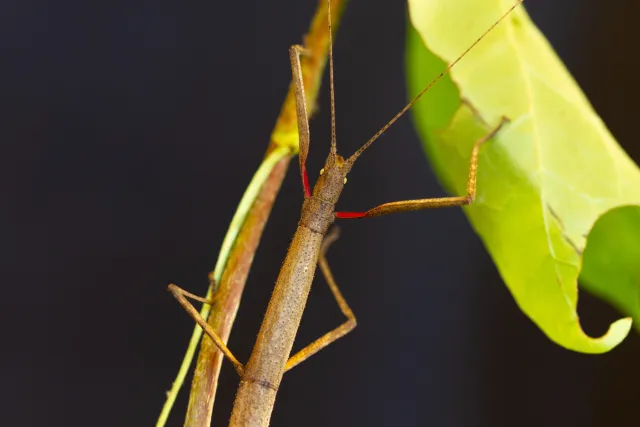
Stick Insects Are Cool but Can Damage Your Plants
Have you ever seen a walking stick insect, maybe in a museum display or at an entomology demonstration? They look just like twigs and are fascinating creatures. This makes them popular as pets in classrooms and homes. However, if pet walking sticks are accidentally or purposefully let out of their cages, they can become pests in the landscape.
The Indian walking stick, native to India, has established in coastal California landscapes after escaping from captivity. While they look cool, these insects feed on a wide variety of plant species like ivy, privet, rose, and even some vegetable plants. They are mostly a nuisance although walking stick insects can defoliate plants.
Indian walking stick insects can produce viable eggs without mating, and their eggs are hard to distinguish from their droppings. This means that you can unwittingly release them into the landscape when you clean their cages.
For more details on the biology of this insect, identification, and how to manage the spread of the Indian walking stick, see the newly revised Pest Notes: Indian Walking Stick by authors Dr. David Headrick from Cal Poly SLO and UC IPM's Karey Windbiel-Rojas.