
Tap Water Day 2026: What Shapes Trust in Tap Water
Tap Water Day 2026: What Shapes Trust in Tap Water

Tap water trust has become an increasingly central concern across the water sector, drawing attention from agencies, educators, and policymakers alike.
This growing focus reflects a broader recognition: communities have consistently signaled the need for greater attention to how trust in drinking water is built, maintained, and, in some cases, lost.
As conversations expand, a fundamental question remains:
Do we fully understand the underlying drivers of trust in tap water, and how those drivers differ across communities, contexts, and experiences?
Trust in tap water is often framed as a direct outcome of water quality.
In practice, it is a constructed condition, shaped by the interaction between measurable system performance and how that performance is communicated, experienced, and interpreted.
Water quality can be defined, monitored, and regulated.
Trust cannot.
It is produced through a combination of data, institutional credibility, communication practices, and lived experience, operating across different scales and points of contact within the system.
Tap Water Day, observed on May 7, provides an entry point into examining this relationship.
Not only whether water meets regulatory standards, but also how individuals and communities come to accept, question, reinterpret, or disengage from the water delivered to them.
Framing the Moment
Tap Water Day sits within Drinking Water Week, but occupies a distinct analytical position within the broader drinking water landscape
Drinking Water Week centers on system performance, infrastructure integrity, and regulatory compliance, domains in which water is evaluated through measurable indicators, operational standards, and institutional accountability.
For a deeper examination of drinking water systems, including how they function across infrastructure, governance, and regional coordination, see our recent discussion on Drinking Water Week 2026.
Tap Water Day shifts the focus to the point at which these systems are encountered, interpreted, and acted upon.
At the tap.
This point of interface is both physical and interpretive.
It is where technical outcomes are translated into lived experience, where data is filtered through perception, and where regulatory compliance is assessed, implicitly or explicitly, through trust.
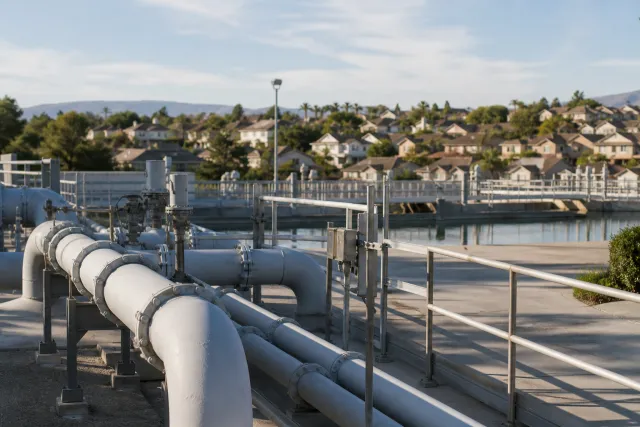
At this interface, water systems are no longer experienced as infrastructure.
They are experienced as quality, safety, reliability, or risk.
And it is here that decisions are made, to drink, to filter, to question, or to disengage.
Understanding this interface is critical.
Because system performance, as measured by technical standards, does not automatically translate into system acceptance.
That translation depends on how information is communicated, how experiences are formed, and how trust is constructed at the point of use.
💡 Did you know?
A drinking water system can meet all regulatory standards and still face low public confidence, highlighting that system performance and system acceptance are not always aligned.
Defining the Observance
Tap Water Day is a public awareness initiative centered on the value of tap water and the public systems that deliver it.
Unlike more formalized observances within the water sector, it does not operate under a single national framework, regulatory body, or standardized annual theme.
Instead, it has evolved through advocacy-driven efforts and public campaigns, particularly from organizations such as Food & Water Watch, reflecting a decentralized approach to engagement.
Its messaging has historically emphasized:
- promoting tap water as a primary drinking water source over bottled alternatives
- highlighting the environmental and economic implications of bottled water consumption
- encouraging reinvestment in and protection of public water infrastructure
This structure is significant.
Because without a centralized framework, Tap Water Day is shaped by the priorities, narratives, and strategies of those who adopt and promote it.
As a result, its focus has tended to emphasize behavioral change and public awareness, rather than system-level analysis or standardized communication approaches.
In contrast, Drinking Water Week, coordinated by American Water Works Association, reflects a more formalized and system-oriented perspective, grounded in infrastructure, operations, and regulatory performance.
💡 Did you know?
Unlike Drinking Water Week, which is coordinated through a national framework, Tap Water Day has no single governing structure, allowing for flexibility in messaging but also resulting in variation in how trust, transparency, and water quality are communicated across communities.
What Has Been Emphasized
To date, Tap Water Day messaging has largely centered on behavior.
Encouraging individuals to:
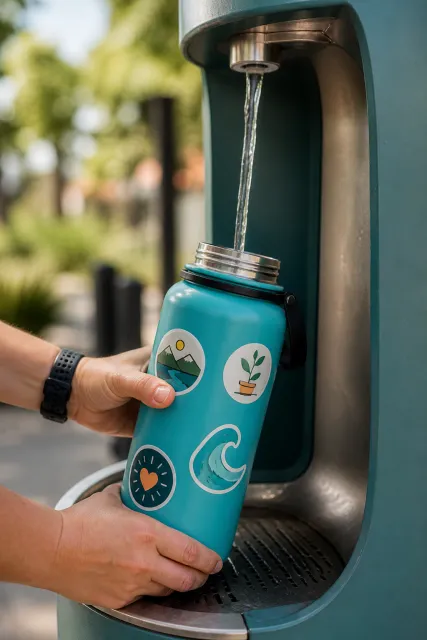
- Choose tap water
- Reduce bottled water consumption
- recognize cost and environmental benefits
These efforts have contributed to increased awareness and, in some cases, measurable shifts in consumption patterns.
However, this emphasis reflects a particular framing of the issue.
It positions the decision at the tap primarily as a matter of individual choice, shaped through information, incentives, and awareness.
What receives less attention is the underlying structure of that choice.
Behavior does not emerge in isolation.
It is formed through a combination of prior experience, perceived risk, trust in institutions, and the accessibility and clarity of information.
In this sense, behavioral messaging often operates at the final stage of decision-making, without fully engaging the processes that lead to that decision.
This creates an important limitation.
Efforts that focus on encouraging specific actions, such as choosing tap water, may not fully address the reasons individuals hesitate, question, or opt out of those actions in the first place.
As a result, behavioral change is pursued without a parallel understanding of behavioral formation.
This distinction is critical.
Because two individuals may receive the same message, yet respond differently based on how they interpret water quality, how they assess credibility, and how prior experiences shape their expectations.
Without engaging these interpretive layers, messaging risks remaining one-directional.
It informs, but does not necessarily resonate.
It encourages, but does not always translate into sustained confidence.
This suggests that the next phase of engagement requires a shift in focus.
From promoting behavior To understanding how behavior is constructed
From encouraging action To examining the conditions under which action becomes meaningful and credible
💡 Did you know?
Many Tap Water Day campaigns emphasize behavioral change, but less frequently examine how people interpret water quality information, assess credibility, or construct confidence in the water they use
From Quality to Interpretation
Drinking water systems in the United States operate within a highly regulated framework.
Water is monitored, tested, and reported.
Standards are defined and enforced.
From a technical standpoint, this represents a strong system.

Yet variation in public confidence persists.
This suggests that the critical issue is not only the quality of water, but how that quality is interpreted.
At the household level, decisions are rarely based on regulatory thresholds.
They are shaped by:
- clarity and accessibility of information
- past experiences with water quality or advisories
- sensory indicators such as taste and odor
- and trust in the institutions responsible for delivery
In community-based workshops that include water tasting and basic water testing, these dynamics become particularly visible.
Participants are often invited to evaluate different water samples without prior identification.
In several instances, individuals are unable to distinguish tap water from other sources when labels are removed.
When asked to indicate preference, some participants select tap water based on taste alone, despite having previously expressed hesitation toward it.
These observations suggest that perceptions of tap water are not always formed through direct sensory experience alone.
They are shaped by a combination of prior information, expectations, and broader narratives about water quality.
Decisions at the tap are not determined solely by measured water quality, but by how that quality is interpreted, experienced, and contextualized at the household level.
These insights highlight the importance of aligning technical information with lived experience in efforts to strengthen public confidence in tap water.
Information Systems and Their Limits
Consumer Confidence Reports (CCRs) function as a central mechanism for transparency within drinking water systems.
They are structured to provide standardized information on:
- source water
- detected constituents
- compliance with regulatory standards
- and aspects of system operation and monitoring
For a deeper understanding of how these reports communicate water quality information and how to interpret them in practice, see our discussion on Consumer Confidence Reports (available in English and Español).
In this sense, CCRs represent a formalized information system, designed to make technical data publicly available and to support informed decision-making.
However, the presence of information does not ensure its function.

Availability does not guarantee access,
access does not ensure interpretation,
and interpretation does not produce trust.
These transitions are not automatic.
They depend on how information is communicated, contextualized, and aligned with the experiences of those receiving it.
As a result, CCRs often operate as compliance instruments, fulfilling regulatory requirements, while their potential as communication tools remains underutilized.
This disconnect represents a structural limitation in how information moves through drinking water systems.
It is not a limitation of data quality, but of information function.
💡 Did you know?
Consumer Confidence Reports (CCRs) were mandated by the 1996 amendments to the Safe Drinking Water Act to improve transparency and public right-to-know in drinking water systems. In California, CCRs are a required annual communication from water providers.
Reframing Trust as a System Component
Trust is not external to system performance.
In practice, it operates as a component of that performance.
It shapes how drinking water systems function, not only through infrastructure and compliance, but through how information is received, how risk is interpreted, and how individuals respond at the point of use.
At the tap, these responses take multiple forms.
Residents may accept tap water without hesitation, apply additional treatment through filtration, substitute with bottled water, or disengage from the system altogether.
These decisions are not isolated.
They are influenced by both current conditions and prior experiences.
In community-based workshops that include water tasting and basic water testing, these dynamics become particularly visible in how participants engage with water at the point of use.
Even when water quality information is presented, responses are often shaped by prior beliefs, familiarity, and expectations.
In some cases, participants approach tap water with hesitation based on what they have heard, while others rely on taste or past experiences to guide their choices.
These interactions highlight that trust is not formed at a single moment, but is carried into each new encounter with water.
In the United States, high-profile drinking water crises, including the Flint Water Crisis, have had enduring impacts on public confidence in water providers.
These events function as reference points.
They shape how communities interpret new information, assess institutional credibility, and evaluate risk, often extending beyond the specific systems in which they occurred.
In some communities, particularly those with historical experiences of underinvestment or exposure to water quality issues, trust is also shaped by broader social and institutional context.
These experiences can influence how information is received and how credibility is assessed, reinforcing the need to consider trust as both a technical and social condition.
At the same time, in Southern California and across California, trust is shaped by a range of localized and emerging issues.
These include concerns about lead in school and building plumbing, detections of PFAS in groundwater sources, seasonal changes in taste and odor, and periodic advisories related to system disruptions.
While many of these events are managed within regulatory frameworks and do not necessarily indicate system-wide failure, they influence how communities interpret water quality and reliability.
From a public perspective, distinctions between source contamination, distribution issues, or aesthetic changes are often less clear.
As a result, even well-managed events can contribute to broader uncertainty.
This highlights a critical point.
Trust in tap water is not determined solely by present-day system performance.
It is shaped by historical experience, collective memory, and the consistency and clarity of communication over time.
The implications extend beyond individual behavior.
Patterns of reduced tap water consumption can increase reliance on bottled water, affect household costs, and shift perceptions of public systems.
At a broader scale, diminished trust can influence public support for infrastructure investment, rate adjustments, and long-term system planning.
Trust, in this sense, is embedded within system performance.
It functions as a feedback mechanism, linking technical systems with social response.
💡 Did you know?
Events such as the Flint Water Crisis, along with more localized issues like PFAS detections and changes in water taste or odor, can influence public confidence in drinking water systems beyond the areas directly affected, shaping how communities interpret water quality and trust their own providers
What Is Missing
Despite growing attention to tap water use, sustainability, and public awareness, a critical dimension remains underdeveloped in both practice and discourse.
The focus has largely been on encouraging behavior.
This distinction is fundamental.
Because decisions at the tap are not simply responses to messaging.
They are the result of how individuals interpret information, assess risk, and evaluate trust in the systems and institutions that provide water.
While significant effort has been directed toward generating and sharing water quality data, far less emphasis has been placed on how that data is received, understood, and used across different communities.
This creates a gap between information availability and information function.
A gap that is not uniform.
It varies across:
- communities with different historical experiences
- populations with varying levels of access to information
- and audiences with different levels of trust in institutions
As a result, the same data can produce different interpretations, and the same system performance can yield different levels of confidence.
What is also missing is the systematic integration of community-level insight into drinking water decision-making.
While technical monitoring is highly developed, there is comparatively limited infrastructure for understanding:
- how residents perceive water quality
- how trust is built or eroded over time
- how communication strategies influence behavior
- and where barriers to understanding exist
Without this layer of insight, efforts to improve public confidence risk remaining one-directional.
Focused on delivering information, rather than ensuring it is meaningful, accessible, and actionable.
This points to a broader limitation.
Drinking water systems are designed to measure performance, but not consistently designed to measure perception.
Yet perception directly influences use.
And use, in turn, influences system outcomes.
Addressing this gap requires a shift.
From:
- information provision
To:
- information interpretation
From:
- compliance-driven communication
To:
- engagement-driven communication
From:
- system-centered metrics
To:
integrated metrics that include both performance and public experience
💡 Did you know?
Drinking water systems routinely monitor water quality with high precision, but there are far fewer standardized approaches for measuring public trust, perception, and understanding, even though these factors directly influence how water systems are used and supported.
Our Contribution: From Data to Understanding: A Systems-Based Approach to Trust
Within Pure Water Matters, Tap Water Day is not approached as a behavioral campaign.
It is approached as a point of analysis and intervention.
An opportunity to examine how drinking water systems extend beyond infrastructure and compliance into the domains of communication, perception, and decision-making.
This perspective begins with a simple premise:
Information alone does not produce understanding.
Understanding does not automatically produce trust.
Bridging these transitions requires more than data availability.
It requires systems that are designed to translate technical information into forms that are accessible, interpretable, and meaningful across different audiences.
From this standpoint, strengthening trust in tap water involves aligning three interconnected components:
- Data, including water quality monitoring, regulatory reporting, and system performance metrics
- Communication, including how information is framed, delivered, and contextualized
- Experience, including how individuals encounter, interpret, and respond to water in everyday settings
These components do not operate independently.
They interact.
Gaps in any one of these areas can limit the effectiveness of the others.
For example, high-quality data without effective communication may not reach or resonate with intended audiences.
Clear communication without alignment to lived experience may not be trusted.
And experience, shaped by past events or perceptions, can override both data and messaging.
A systems-based approach recognizes these interactions.
It moves beyond viewing trust as an outcome to be achieved, and instead treats it as a condition to be understood, monitored, and strengthened through integrated strategies.
This includes:
- generating community-level data on perception, trust, and behavior
- examining how different audiences interpret water quality information
- identifying barriers to understanding and engagement
- and supporting communication approaches that are responsive to community context
In this framing, Tap Water Day becomes more than a moment of awareness.
It becomes a point of connection.
Linking system performance with public understanding, and technical data with lived experience.
💡 Did you know?
Efforts to improve confidence in tap water are most effective when they integrate water quality data with communication strategies and community-level insights, rather than relying on information alone.
Final Reflection
Tap Water Day has contributed to making tap water visible.
It has highlighted its value, its accessibility, and its role within broader sustainability conversations.
But visibility alone is not sufficient.

As drinking water systems continue to evolve in complexity, the relationship between system performance and public understanding becomes increasingly important.
Trust does not emerge automatically from compliance.
It is shaped through how information is communicated, how experiences are formed, and how consistently institutions engage with the communities they serve.
This places the focus not only on what is delivered, but on how it is understood.
Tap Water Day, in this context, becomes more than a moment of awareness.
It becomes an opportunity to examine how water systems are interpreted at the point of use, and how those interpretations influence behavior, perception, and long-term system resilience.
Because water quality can be measured.
But confidence in that water is constructed.
And it is at the tap that these processes converge.
💡 Final Did You Know?
The long-term success of drinking water systems depends not only on meeting regulatory standards, but also on maintaining public confidence, which influences how water is used, valued, and supported over time.
✍🏽 About the Author
Dr. Esther Lofton is the Urban Watershed Resilience Advisor with University of California Cooperative Extension (UCCE), where she advances water quality, conservation, and community engagement across Southern California.
Through the Urban Watershed Resilience Program, she works at the intersection of research, Extension, and community partnership to address complex water challenges. Her work focuses on translating science into practical, community-centered approaches that support water supply reliability, improve water quality, and strengthen public understanding and trust.
She collaborates with water agencies, public institutions, educators, and community organizations to connect water systems with the people they serve, with a focus on outreach, applied research, and long-term resilience across the region.
🌐 Explore More
📖 Related Reading
💧 Drinking Water Week 2026
From Source to System: A Regional Check on Reliability, Risk, and Responsibility
Explore the broader systems, infrastructure, and resilience context of drinking water:
https://ucanr.edu/blog/water-resilience-climate-change-and-water-systems-california/article/drinking-water-week-2026
📊 Consumer Confidence Report (CCR)
Learn how to read and interpret your drinking water quality report in Pure Water Matters: A Guide to Drinking Water Quality:
📖 Explore the SoCal Water Blog Series
Explore our full collection of blogs across drinking water, environmental water quality, water use efficiency, supply security, and water equity:
https://ucanr.edu/site/socal-water-resources/socal-water-blog-series
💧 Latest Blog
Inspiring Young Water Stewards Through Hands-On Learning at the 2026 OC Children’s Water Festival
https://ucanr.edu/blog/water-supply-security-wss/article/oc-children-water-festival-2026-water-education
🌊 SoCal Water Resources
SoCal Water Resources (Urban Watershed Resilience Program)
https://ucanr.edu/site/socal-water-resources
Watersheds Program (Los Angeles & Ventura Counties)
https://ucanr.edu/site/watersheds-los-angeles-and-ventura-counties
📩 Contact / Collaborate
📲 Follow & Stay Connected
Instagram | TikTok | X
@socal_h2o | @socal_water | @socal_h20