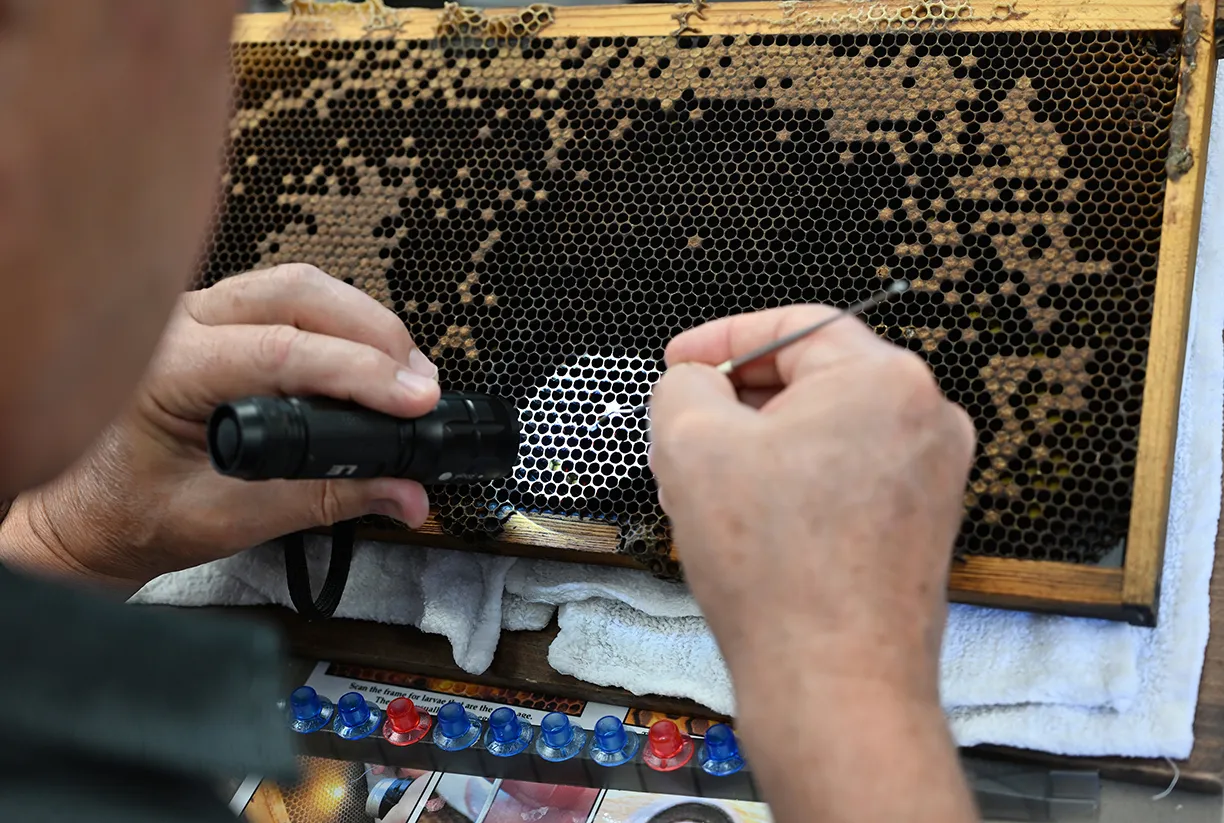
The Art and Science of Rearing Queen Bees
If you're a beekeeper interested in learning how to rear queen bees, this is for you!
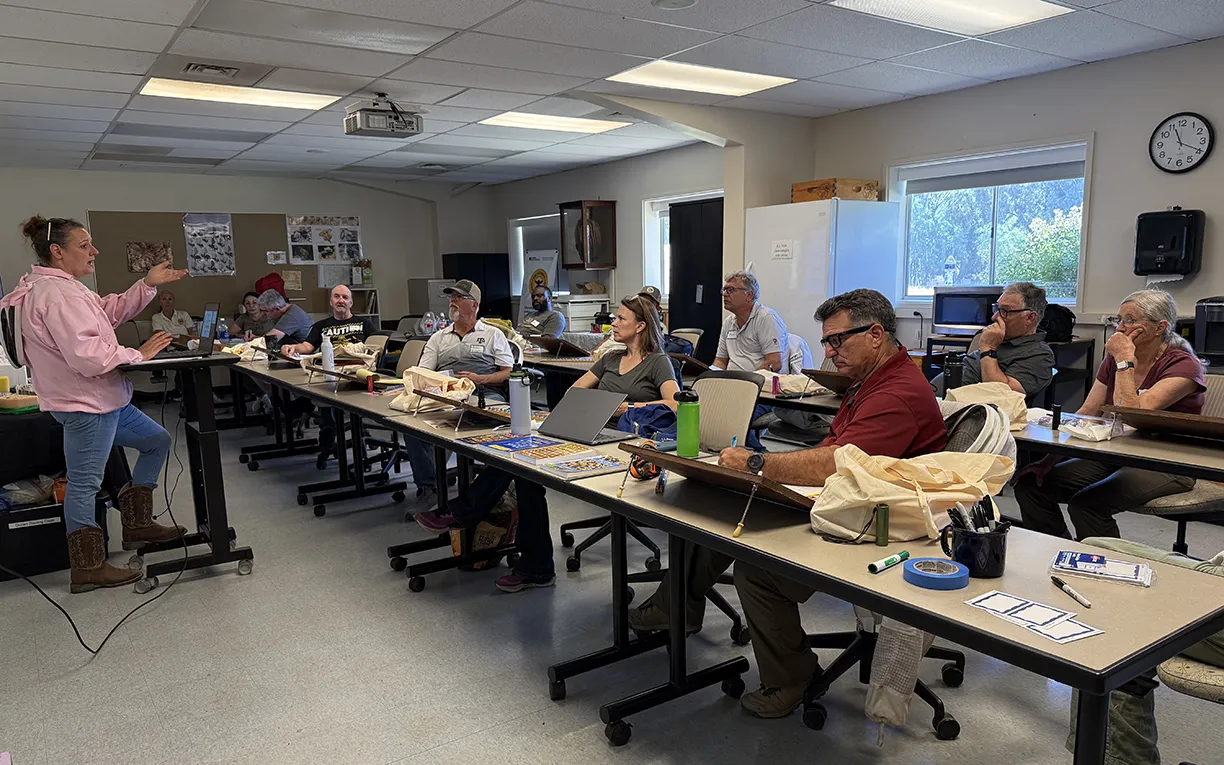
The UC California Master Beekeeper Program (CAMBP) is offering an in-person Queen-Rearing Techniques Short Course (QRTSC) on Saturday and Sunday, May 30-31 at the Harry H. Laidlaw Jr. Honey Bee Research Facility on Bee Biology Road, UC Davis. The course will take place from 9 a.m. to 3 p.m. both days.
The E.L. Niño Bee Lab will provide all classroom, grafting and queen rearing supplies, as well as lunch and snacks. The QRTSC is a short course recommended for Journey level CAMBP participants.
“Participants will be able to deepen their knowledge on queen biology and breeding programs, practice and hone their grafting skills, understand the basics of a cell starter and finisher system, explore combination methods and mating nuc uses, learn hygienic testing for varroa, and assess personal skill and competency in grafting on Day 2 based on Day 1 grafts,” CAMBP officials said on their website.
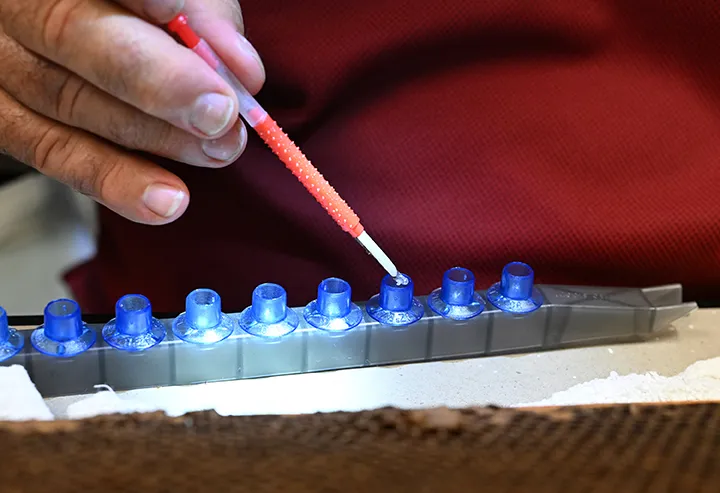
Participants can take their viable queen cells from the bee lab the following Friday. A single grafting bar can hold up to 15 cells.
Facilitating the course are
- Bee scientist Elina Niño, professor of Cooperative Extension, apiculture; member of the UC Davis Department of Entomology and Nematology; and founder-director of CAMBP.
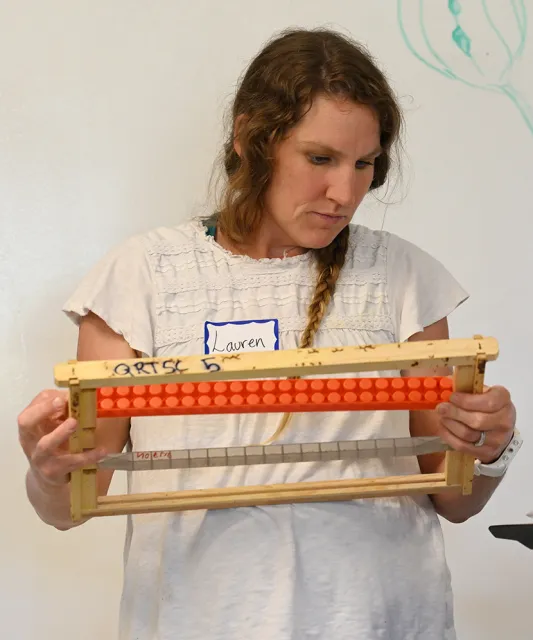
- CAMBP instructor Lauren Gregory Rusert, a doctoral candidate in E. L. Niño Bee Lab and
- Joseph "Joe" Tauzer, staff research associate and manager of the Laidlaw facility
The class objectives:
- Expand knowledge of honey bee queen biology
- Explore the basics of selective honey bee breeding programs
- Examine various queen rearing techniques
- Experience grafting techniques
- Assess Varroa mite levels through hygienic testing
Fantastic Opportunity
“It’s a fantastic opportunity to learn from the E. L. Niño Bee Lab Team,” said Wendy Mather, co-program manager of CAMBP and a longtime beekeeper who assists at the sessions. “The classroom time combined with apiary experience offers participants an opportunity to move through all aspects of the queen rearing process."
Fee for the course is $495. More information and the registration link for this event are here or at https://tinyurl.com/4utk8dxb.
Elina Lastro Niño
Niño, who joined the UC Davis faculty in 2014, holds a doctorate in entomology (2012) from the Pennsylvania State University, University Park, Penn. She served as the 2012-2014 USDA-NIFA-AFRI Postdoctoral Fellow, Department of Entomology. The acronyms: USDA, the U.S. Department of Agriculture; NIFA, National Institute of Food and Agriculture; and AFRI, the Agriculture and Food Research Initiative, a flagship competitive grants program that provides funding for fundamental and applied research, education, and extension.
Lauren Gregory Rusert
Doctoral candidate Rusert holds a master’s degree in entomology (2019) from North Carolina State University, where she specialized in queen quality and population genetics of honey bees in Hawaii. An additional project: queen acceptance among honey bee stocks.
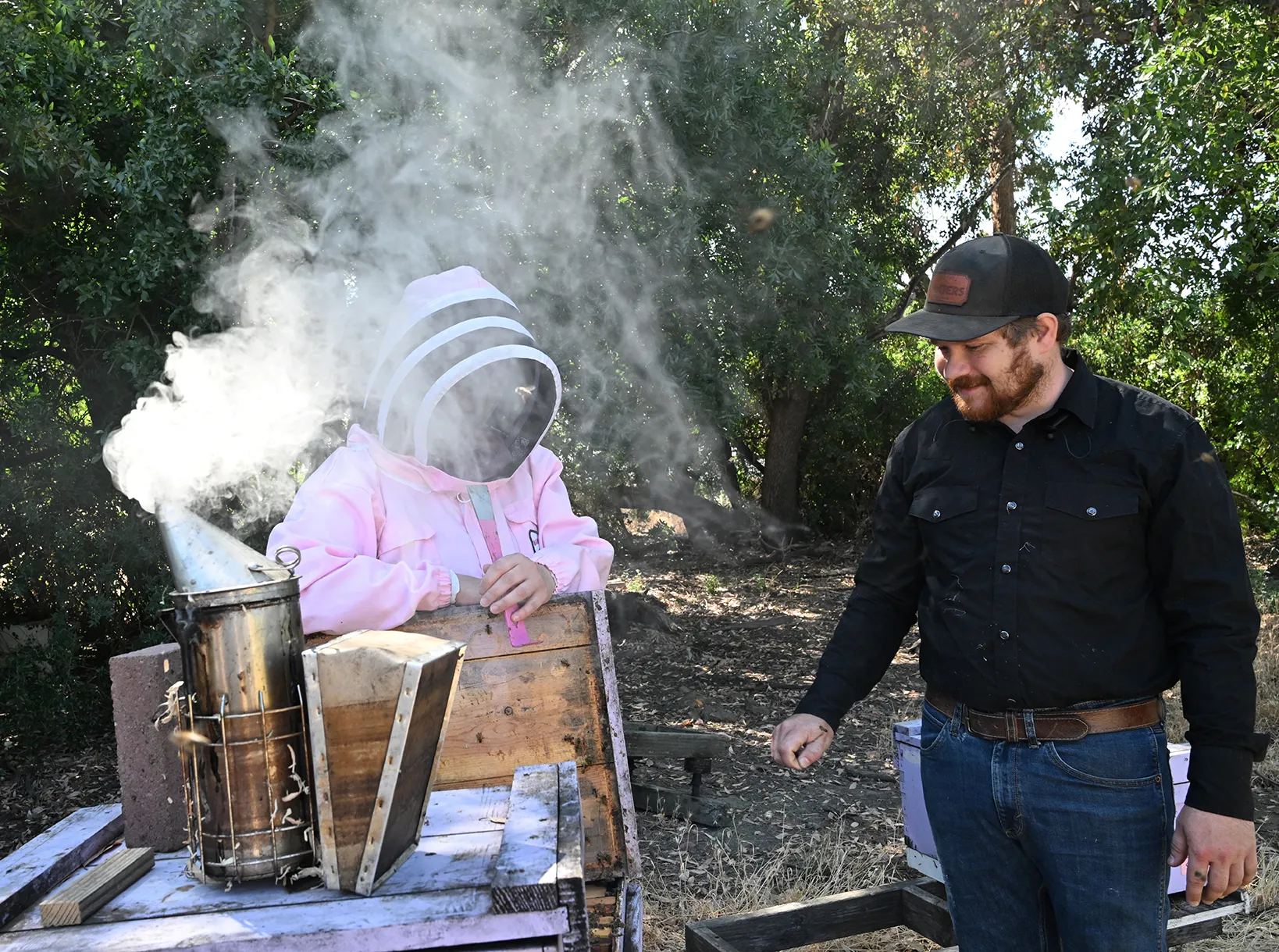
Joseph Tauzer
Tauzer, who has held his current position since 2022, serves three faculty labs within the UC Davis Department of Entomology and Nematology. Educated at a community college in San Luis Obisbo, he worked in his family's apiary business and also in the management of hive health and quality control for a commercial beekeeper. In 2025, UC Davis Chancellor Gary May presented him with a UC Davis Staff Assembly award for outstanding service.
CAMBP, founded in 2016, uses science-based information to educate stewards and ambassadors for honey bees and beekeeping.