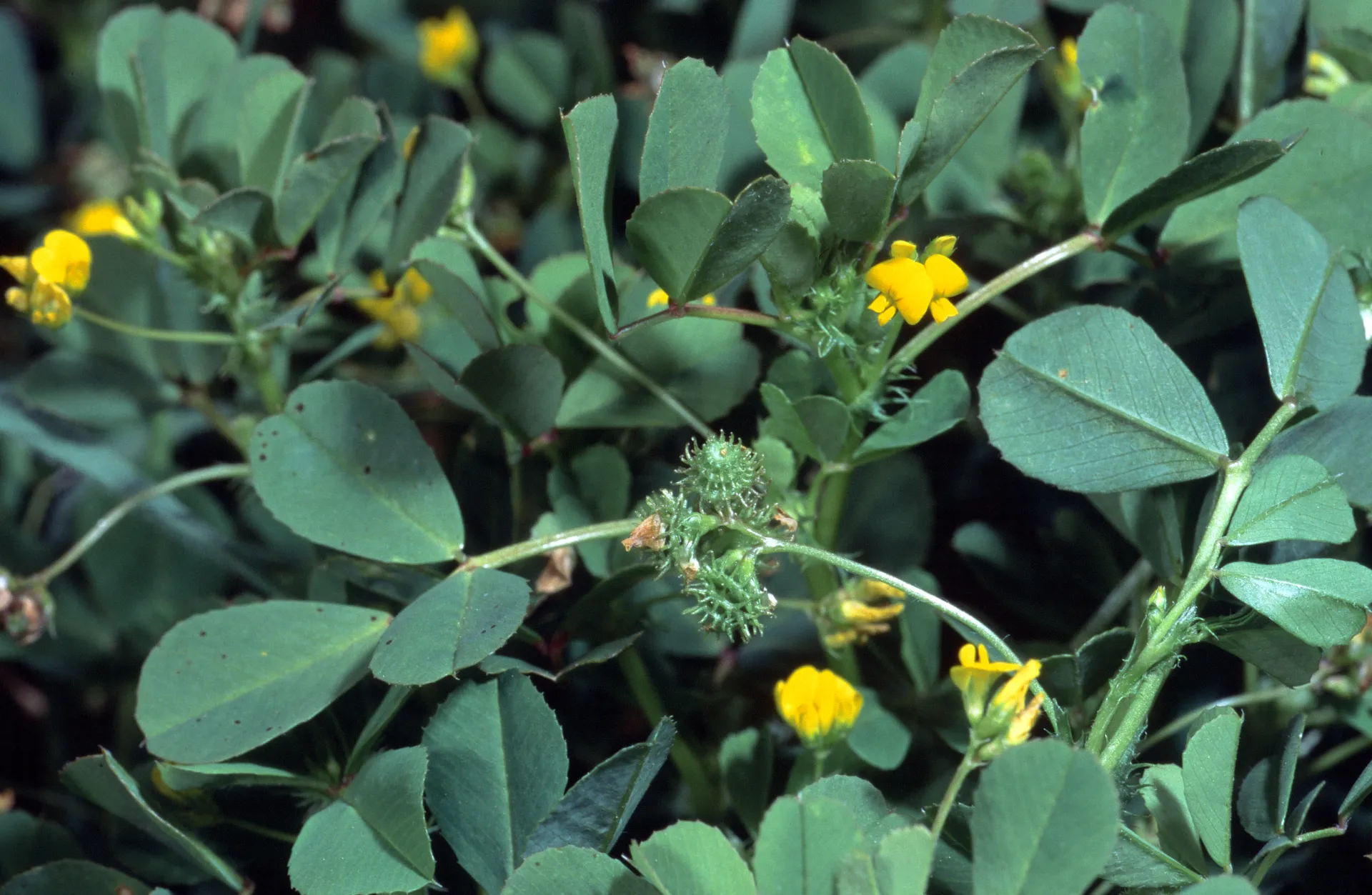
Shamrocks, Clovers, or Weeds?
St. Patrick’s Day makes us think about shamrocks and all things green. With recent warm weather following winter rains, your lawn or garden might be dressing up for Saint Patrick’s Day and Spring with clovers and other weeds.
Clovers begin to germinate in the fall and continue throughout winter and early spring. Their bright green leaves can blemish the look of lawns and may be unsightly when found in ornamental plantings.
Another clover-like weed that might be a familiar sight these days is oxalis (Oxalis pes-caprae), an invasive plant spreading through California’s coastal areas and the Sacramento Valley. Though its leaves make oxalis easy to confuse with clovers, it can be distinguished by its buttercup-like yellow flowers.
Clovers growing in lawns or landscapes are often a sign of low soil nitrogen, so changing fertilization can help prevent their growth. Read the UC IPM publication Pest Notes: Clovers for much more information about identifying clovers and how to manage them.
For some people, clovers are considered weeds, but their flowers attract pollinators and many people just enjoy the green color they bring!