
Growing Lettuce Year-Round
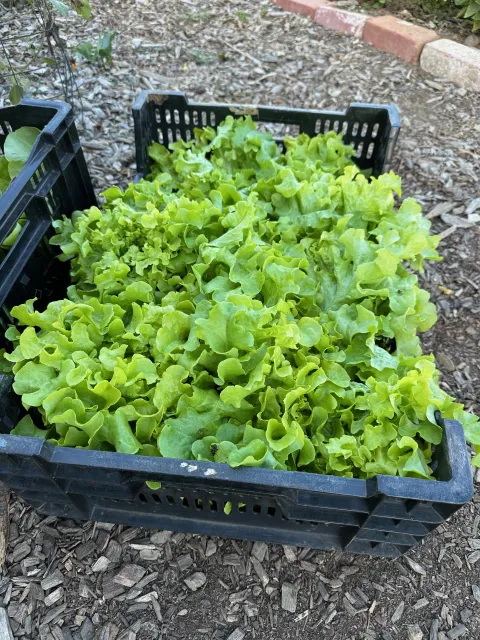
Lettuce is generally considered to be a cool-season annual, but with a little advanced planning and some judicious plant selection, Marin gardeners can enjoy home-grown lettuce throughout the year. Our temperate climate makes it possible to modify the growing conditions for lettuce and enable the plants to thrive in all seasons. That’s good news for salad lovers!
EXTERNAL IMAGE
Seasonal Challenges for Growing Lettuce
Lettuce grows best in 45-to-73-degree temperatures. Heat above 80 degrees causes most varieties to bolt (produce flowers) and become bitter. Temperatures below freezing often result in plant damage. Additionally, the shorter winter daylight hours slow or pause growth.
Volunteers in the Edible Demo Garden like a challenge, so learning how to grow a steady crop of lettuce in every season was an ideal project. Lettuce has become a popular crop at the Indian Valley Organic Farm & Garden. Although the success of the project was evident quantitatively in the over 260 heads of lettuce harvested since July 1, 2025, the qualitative gains, in terms of knowledge and experience, are immeasurable. Some key strategies identified for lettuce growing success include selecting the best varieties, succession planting, and managing environmental conditions.
Selecting the Best Varieties
Lettuce varieties are divided into four categories: crisphead, butterhead, looseleaf, and romaine. Crisphead is the iceberg lettuce found in grocery stores. It takes longer to develop and is difficult to grow in hot climates. It’s not a popular choice for home gardeners and is not a variety grown at the Edible Demo Garden.
Butterhead lettuce, also called bib lettuce, is more heat-tolerant. Varieties of butterhead that have thrived in the Edible Demo Garden are ‘Red Cross’ and ‘Aunt Mae’s Bibb’. Both are heat-tolerant and slow to bolt. ‘Red Cross’ has bright red and green leaves making it especially appealing in summer salads.
Loose-leaf lettuces include the “cut and come again” varieties with different leaf shapes, some described as oak leaf-shaped. They can be harvested by taking the outer leaves and leaving the central leaves to mature for future picking. ‘Smile’ is a bright green oakleaf variety that has performed particularly well in the Edible Demo Garden. Other loose-leaf varieties grown in the garden are ‘Morgana’ and ‘Bijella’. ‘Muir Summer Crisp’ is a dense, wavy-leafed variety that is exceptionally heat-tolerant and slow to bolt.
Romaine lettuce, such as ‘Little Gem’ also grows well in the Edible Demo Garden but takes longer to mature and is not as heat-tolerant as other types. As a result, it is not as productive in the garden as the butterhead and loose-leaf varieties.
Succession Planting
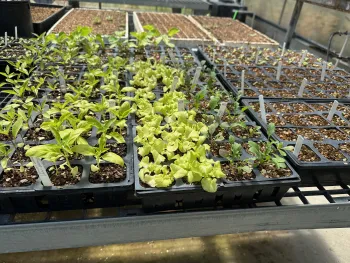
A year-round lettuce harvest requires always having lettuce growing in different stages. That means starting seeds indoors or direct sowing in beds at the same time mature lettuce is being harvested. A volunteer day in the Edible Demo Garden might involve sowing lettuce seeds in cells to germinate in the greenhouse, planting the starts that are now ready in the garden beds, and harvesting the fully grown heads of lettuce for distribution in community-supported agriculture boxes. Intervals for succession planting vary according to the crop, but sowing seed every two weeks is about right for lettuce.
Managing Environmental Conditions
Lettuce requires proper watering and protection to thrive. Frequent, light watering is important for shallow-rooted lettuce. Too little water will stunt and toughen the plants, and too much water causes root rot. Mulching around the plants helps maintain moisture and keeps the leaves off the ground.
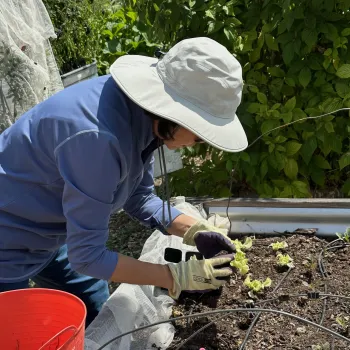
Protection from heat and pests can be challenging. Lettuce appreciates some shade in the summer, so planting it next to taller plants or using shade cloth can reduce the chances of it bolting. Animals and insects love lettuce too. In the Edible Demo Garden, lettuce beds are covered in protective netting to deter hungry birds, rabbits, and other critters. Mesh wire is placed under the beds to stop invasions from below. Even that didn’t prevent gophers from tunneling through the wood on the side of one of the beds and feasting on a few heads of lettuce. The protective netting also provides some shelter from the sun and flying insects. Aphids, earwigs, and slugs can still be a problem, so it pays to be vigilant and remove them as soon as they are discovered.
Click here for more information on growing lettuce:
https://ucanr.edu/site/uc-marin-master-gardeners/documents/lettuce
Check out our new YouTube video: