
Manzanita—“Little Apple”
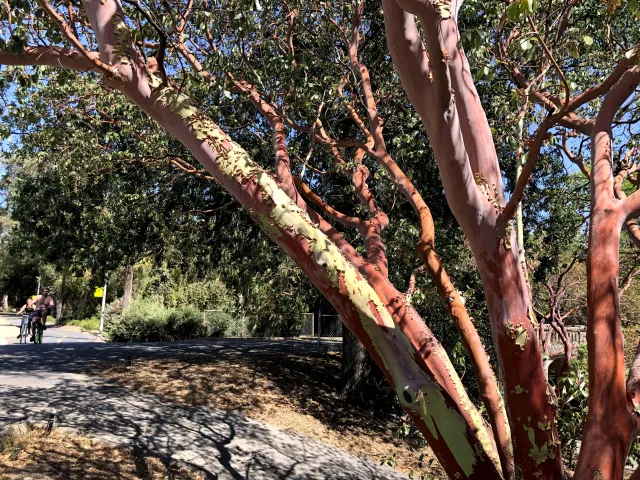
“I hate manzanita!” is the sentiment of a friend of mine who in the early 90s, while working in the U.S. Forest Service with archeologists, was on the lowly field crew, surveying areas scheduled for logging. They were hunting for historic and prehistoric artifacts, often spending way too many hours crawling through 8 to 10-foot manzanita forests, getting cut and scratched, and seldom finding anything. Manzanita is a field crew’s nightmare. But in the native garden, as she attests, it is lovely.
Manzanitas are evergreen groundcovers or large shrubs. Depending on your garden’s size and conditions, manzanita is an excellent choice for a California native garden. A bit of a mouthful to pronounce, the scientific name, Arctostaphylos, is a diverse group of over 90 species, found in California oak woodlands, chaparral, and coniferous forests of northern and central California. The scientific name, Arctostaphylos,was given to the genus by a French naturalst, of Scottish descent, named Michael Adanson (1707-1778), who found the plant growing in Europe. The genus name, Arctostaphylos, comes from the Greek word arctos (meaning bear), and staphyle (meaning “bunch of grapes”), in reference to bears eating the fruit. Found throughout the world, its common names vary. In California, the common name is manzanita, the Spanish word manzana, meaning “apple,” with the suffix ita, or little apple, because of its edible berries that taste like apples.
Manzanita species can be found throughout California, along the coast from the Big Sur area in Monterey County to Del Norte County, far up the California coast, to the higher elevations on the eastern side of the Central Valley, and in the Sierra. While most species are found in California, a few can also be found in Oregon, Washington, Colorado, Nevada, Arizona, Texas and even at the summit of two Guatemalan volcanoes in Central America. This plant is a worthy candidate for waterwise Central Valley gardeners.
Found mostly in chaparral ecosystems, manzanita can be described as a gnarly evergreen shrub or small tree, relatively short lived at 20 to 25 years. Its distinctive bark is smooth and reddish-brown, which can peel in ribbons revealing brighter orange, yellow, or green colors beneath. Flowers are small and bell-shaped, white or pink with a lovely smell. California Indians have a history of tending these plants to harvest the flowers, berries, and bark for cider, teas, and medicines.
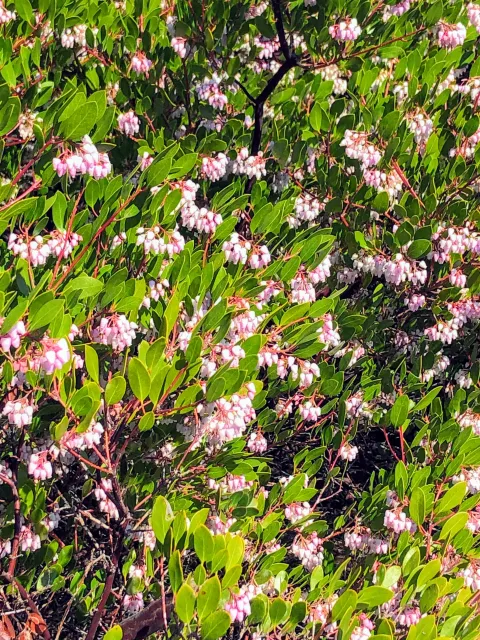
Growth habits vary by species ranging from groundcovers to shrubs to 15 to 20-foot small trees. From January through March, the tree’s flowers offer a nectar source for insects and birds such as bees, butterflies, and hummingbirds. Once the berries form, they provide food sources for several months for bears, coyotes, birds, deer, and other wildlife. Their sculptural shapes provide beautiful landscape forms, as well as a source of shelter for many species. Manzanita can also provide armor for our native gardens, as people are not inclined to tromp through manzanita plantings.
Choosing the Right Manzanita for Your Native Garden
Several popular choices are available that have been selected for surviving in challenging conditions and seem to be winners. Check out on-line reference libraries for more choices available. Here are a few gardener favorites:
- ‘Howard McMinn’ (Arctostaphylos densiflora), the most beloved, widely available and common manzanita found in nurseries, this favorite native is found in many waterwise gardens, thanks to research done by our own former UCCE San Joaquin County Horticultural Advisor, Karrie Reid. It has a dense, rounded form, shiny green leaves, and prolific light pink flowers, from January to March in the Central Valley. Moderately slow growing at 4 to 6 feet tall and 5 to 7 feet wide, it can handle moderate summer watering, and some shade, and is tolerant of overhead watering. Its cinnamon-red bark twists with age.
- Sentinel Vine Hill (Arctostaphylos densiflora ‘Sentinel’) is a faster growing, more upright variety than Howard McMinn, with prolific flowers.
- John Dourley (Arctostaphylos ‘John Dourley’) is a favorite low-growing, spreading groundcover with blue green leaves, excellent for acting as “armor” for the landscape.
- Dr. Hurd (Arctostaphylos manzanita ‘Dr Hurd’) is a large shrub with year-round beauty that is suitable for larger gardens.
Tips for Success
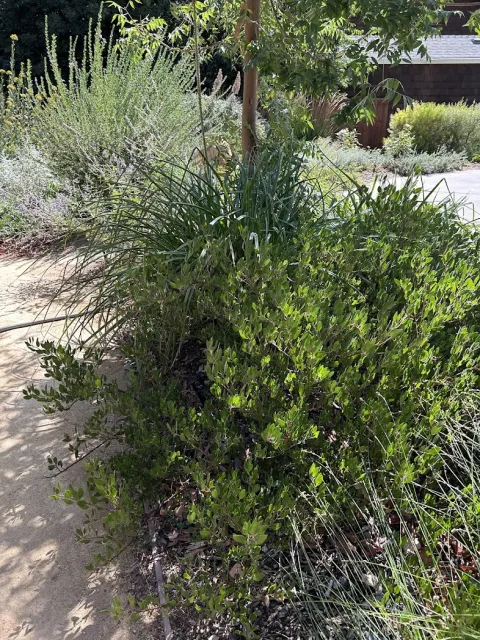
Avoid overwatering most varieties, especially during the summer. Overwetted soils during summer can create opportunities for soil-borne diseases to infect manzanitas. The California Indians used to burn the manzanita’s dead twigs to prevent future insect problems, while also promoting tip growth where the flowers develop.
Consider Habitat
Many on-line resources are available to help you consider the correct manzanita plant for your native garden. Study the mature size of the plant you are considering for your native garden. Some manzanitas are tolerant of pruning, others are not, and long gone are the days of controlled cultural burns for California landscapes.
If you don’t have space to plant your own collection of manzanitas, at least learn to recognize this beautiful native plant from afar. And be thankful you don’t need to crawl under these plants hunting for archeological finds, as my friend did, so long ago.
Author: Kathy Grant, UC Master Gardener
References: