
Coming to a Euc Near You?
Approximately 90 of the more than 700 species in the tree genus Eucalyptus have been introduced into North America over the last 150 years. Eucalyptus spp. are native to Australia and New Guinea. Many residents of California find the growth form, evergreen foliage, floral show, and other horticultural qualities such as drought tolerance highly desirable attributes of eucalyptus trees. However, exfoliating bark and dropped leaves can rapidly create flammable fuel loads under trees or on house roofs, sudden limb drop can damage property and injure people, and invasive growth habits of some species are problems associated with these common urban forest trees in California. The most widespread use of eucalyptus in California has been as plantings in residential areas to form shady urban forests. Low water requirements, tolerance of low quality soils, and, until recently, the absence of insect pests and diseases have made eucalyptus particularly valuable in residential areas.
In California, eucalyptus trees were first propagated from seed brought from Australia. Consequently, insect pests and diseases associated with growing plants were not introduced with living trees. Eucalyptus that were grown in California from seeds were relatively free of insect pests until the 1980's, when the eucalyptus longhorned borer, Phoracantha semipunctata, was discovered in Orange County in 1984. In 1995, approximately ten years after the introduction of P. semipunctata, a second cerambycid species, Phoracantha recurva, was found in southern California (Los Angeles, Riverside, and San Bernardino Counties) attacking eucalyptus.
Phoracantha beetles are large, often more than an inch in length. They are characterized by prominent long antennae, an obvious feature that is characteristic of cerambycid or long horn beetles. The two species are easily separated by the patterns on the wing covers (elytra) that lie across the backs of the beetles.
P. semipunctata has been accidentally introduced into virtually all Eucalyptus-growing regions of the world (e.g., Brazil, Canary Islands, Chile, Egypt, France, Israel, Italy, Morocco, Reunion Island, Spain, and South Africa) and is causing significant tree mortality in many of the areas it has invaded. P. recurva is demonstrating a similar high level of invasion throughout areas of the world with significant eucalyptus production. These two are just the tip of the pest wave that has hit eucs in the last 30 years, there have been at least 18 species since longhorned borer. https://ucanr.edu/county/kern-county/eucalyptus-pests
And now comes Dotted Paropsine Leaf Beetle that goes to over 20 species of eucalyptus, many of which are used in windbreaks, including blue gum and lemon-scented gum.The dotted paropsine leaf beetle was first discovered feeding on lemon scented gum (Corymbia citriodora) in Los Angeles in August 2022. This was the first report of this beetle in North America and it has quickly spread throughout Southern California. Currently the beetle can be found throughout Los Angeles, Orange, San Diego, and San Bernadino counties with unconfirmed reports in Ventura County.
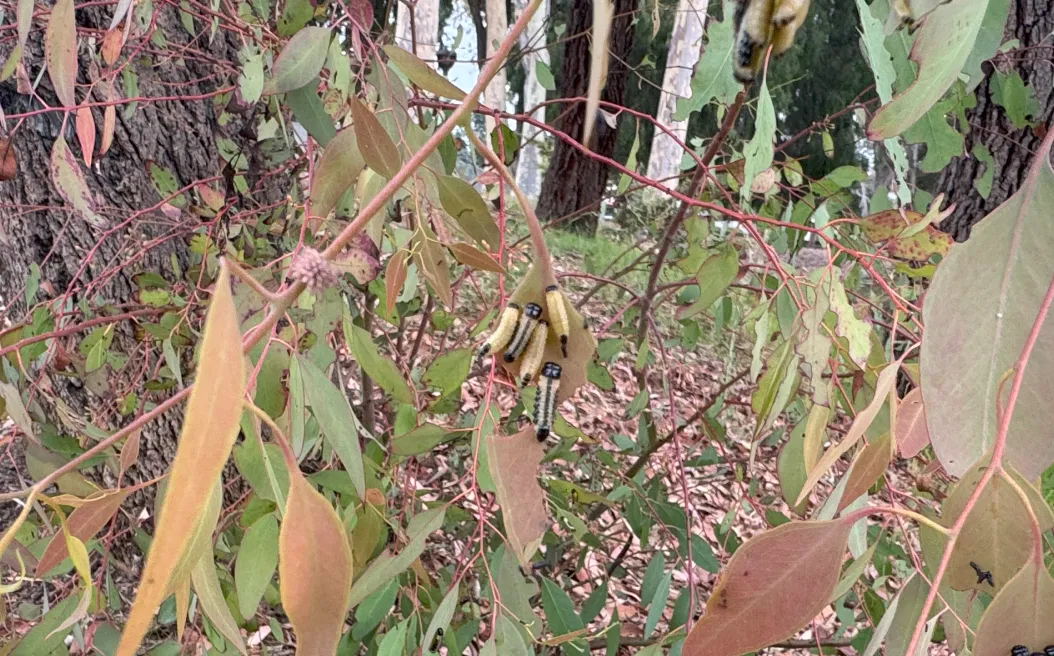
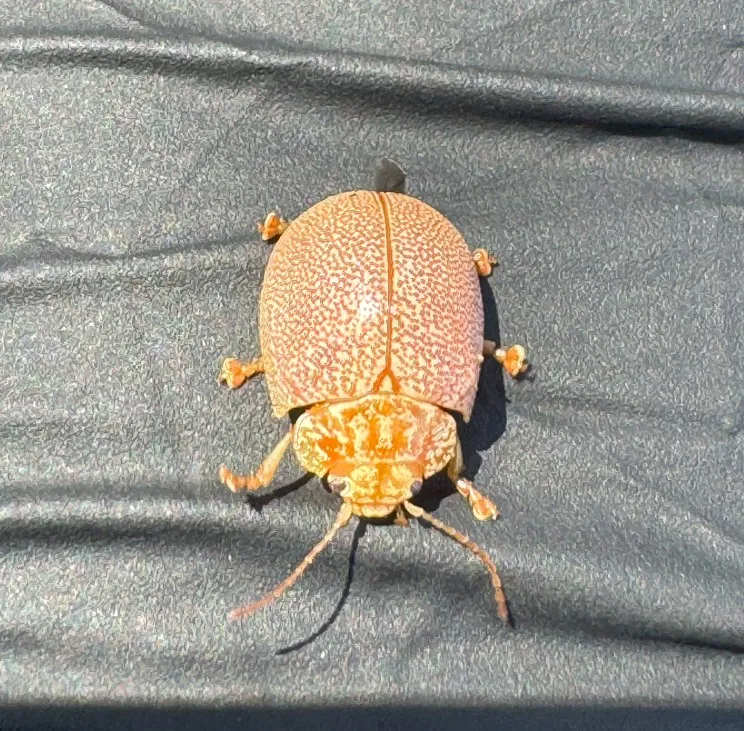
Julie Clark, an Education Specialist with UC ANR has been dealing the with beetle for the last few years. She says, "The Ventura County Ag Commissioner first detected the beetle 4-5 years ago. It has become more prevalent in the county in the last year. There's been super heavy infestations around in LA, especially the west San Fernando Valley near Glendale and Burbank for 7-8 years. Most eucs in SFV appear infested. Orange County started getting hard hit about 4 years ago. Chris Schogren - LA/Orange County Horticulture Advisor has been studying the beetle. He believes the populations are cyclical. So far, they seem to be more of a nuisance than harmful. They are leaf feeders. The eucs respond by producing more sap, which is sticky and looks like blood."
So that's what we know so far. Read Schogren's blog article here:https://ucanr.edu/blog/pests-urban-landscape/article/dotted-paropsine-leaf-beetle-threatens-californias-eucalyptus
To subscribe to this BLOG: https://ucanr.edu/webform/blog_subscription?source_entity_type=group&source_entity_id=14816