
What You Can Do on California Biodiversity Day
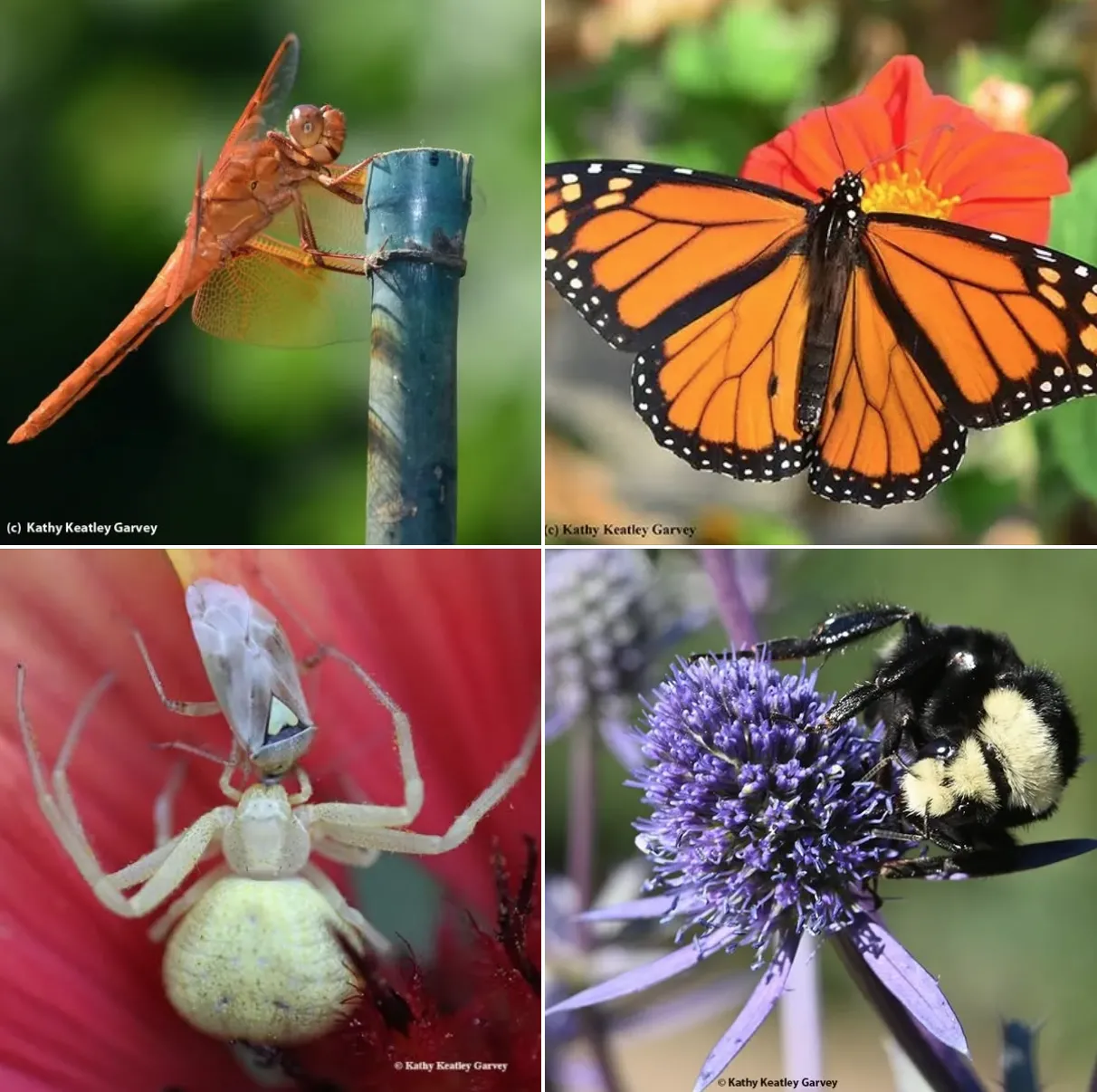
What are you doing on California Biodiversity Day?
That's Saturday, Sept. 6, but the celebration of diverse life continues through Monday, Sept. 14.
You can join the Find 30 Species for California Biodiversity Day project on iNaturalist, and submit observations of 30 wild species between those dates. "This statewide effort helps us better understand our incredible biodiversity, and the data we collect together will inform the California 30x30 Initiative," says the California Natural Resources Agency (CNRA). "In addition to submitting observations, it's just as important to identify observations! So you also can participate by adding identifications to observations in the project."
CNRA explains that "biodiversity comes from the words 'biological diversity' and refers to the variety of life on earth. Think of one of our varied iconic landscapes in California, such as a coastal redwood forest. Then imagine all the living organisms that live within it, from everything as small as bacteria and fungi to as big as the redwood tree and the ecosystem that surrounds it. This is the biodiversity of California."
Did you know that California is one of the most biodiverse regions in the world and is one of 36 Global Biodiversity Hotspots?
CNRA says that California has:
- More than 30 percent of all the plant and vertebrate species in the United States.
- More than 1000 species of vertebrates: 650 birds, 220 mammals, 100 reptiles, 75 amphibians, 70 freshwater fish, 100 marine fish and mammals (65 percent endemic to California).
- More than 6500 types of plants (more than 2000 are endemic to California).
- 52 types of conifer trees (14 endemic to California). By comparison, the state with the next most conifers is Oregon with 32 types.
- More than 30,000 species of insects, including 1600 species of native bees
- More than 1200 types of crops that require pollination, and in California, pollinator-dependent crops are worth an estimated $11.7 billion.
For more information, access this California Biodiversity Day website and the Atlas of the Biodiversity of California.
While you're observing California Diversity Day, keep an eye out for monarchs so scientists will know where they are. A spokesperson said: "Last year, the California State Parks Foundation released an analysis of 26 years of data on the western monarch butterfly population, showing that a significant number of those counted are found in California state parks. In 2024-2025, Lighthouse Field State Beach, Natural Bridges State Beach, and Pismo State Beach were among the top overwintering sites for western monarchs."
"Millions of western monarchs used to return to coastal California every year, but the population has plummeted in recent decades. Numerous factors have contributed to this decline, including climate change, habitat loss, pesticides, and disease. The 28th annual Western Monarch Count found a peak population of 9,119 monarchs, the second-lowest overwintering population ever recorded since tracking began in 1997. A Species Status Assessment predicts a greater than 95 percent chance of extinction for western monarchs by 2080." (See more information on this website)
You can also scout for tagged monarchs that have a tiny radio transmitter attached to their wings. Check out this website and then download this flier to get the app.
To date, we've spotted only two monarchs this year (July 25 and Aug. 21) in our Vacaville garden. Both were females and were laying eggs, but seen no caterpillars.