
Luffa
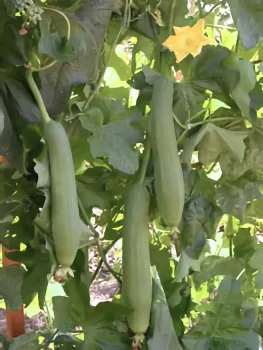
Luffa, also known as loofah, is a member of the cucurbit family (Curcurbitaceae), along with cucumber, melons, and squash. There are two main species: smooth luffa (Luffa aegyptiaca) and angled luffa with ridges running lengthwise (Luffa acutangula). They are fast-growing vines. Luffas can be eaten when young and tender as a summer squash or left on the vine to dry and used as sponges. Native to tropical and subtropical regions, luffa requires a long warm growing season.
Cultural Tips for Growing Squash, UC IPM
Planting
- Direct seed in April to May. Thin to the strongest seedlings, 3 feet apart.
- Transplant 3 feet apart in April to May.
- If growing your own seedlings, start the seeds 4 weeks before you want to plant.
- Provide a strong trellis or other support for this vigorous climbing vine.
Harvesting
- Male blossoms generally appear first. Female blossoms appear later, with fruit following.
- For eating as a summer squash, harvest when the fruit is immature and about 6 inches long.
- For sponges, leave them on the vine until the skin yellows and loosens, and the fruit becomes lightweight as the inside dries out. It takes around 120 days to fully mature. Allow luffa to dry out completely in the sun. You can shake out the seeds for future planting.
- Pollination is done by bees and other insects. If desired, hand pollinate from male flowers to female flowers as needed using a small brush.
Pest management
Luffa has similar pests and diseases to those affecting squash and pumpkin.
More links
- Loofa - How to grow and use, YouTube video, Santa Clara Master Gardeners
- Luffa, University of Florida Extension
- Growing & Harvesting Luffa, North Carolina Cooperative Extension
- Luffa aegyptiaca, North Carolina State University Cooperative Extension