Central Sierra | Master Food Preservers | Articles
Featured Articles by Master Food Preservers
UC Master Food Preservers in Amador, Calaveras, and El Dorado Counties write articles for local publications and posts on food safety, food preservation, food preparation, and reducing food waste, among other subjects of interest.
You can find those articles by clicking the link below.
Central Sierra: Master Food Preserver Articles | El Dorado County
Central Sierra: Master Food Preserver Articles that appeared in El Dorado County local periodicals. Most feature recipes and instructions for preserving the tastes of the season to enjoy at other times of the year.
Central Sierra: Wing Sauce to Enjoy During Football and All Year Round
Preserve It! Chicken Wing Season!
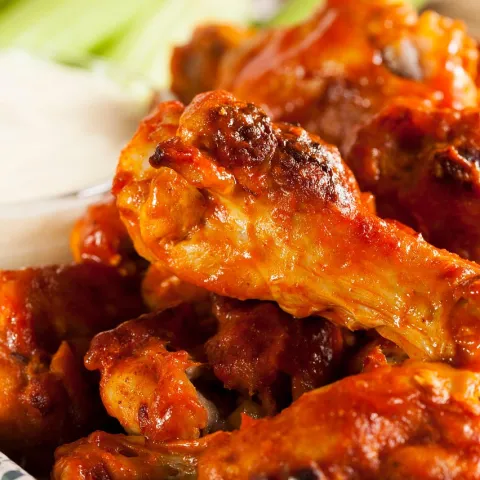
The Super Bowl always means there is a grand feast of snack foods to plan and prepare. While the textures and flavors abound at this annual gathering (whether you watch the game or not), it seems a quintessential ingredient on the menu is the spicy-vinegary buffalo sauce. Traditionally this sauce would be baked into chicken wings (with extra sauce for dipping of course), but it also makes an amazing sauce for pizza or for chicken sliders.
Using grocery-store tomatoes in winter
Sure, it’s not tomato season but that bland winter tomato from the store will shine in this sauce recipe. Keep the peels from the tomatoes, sprinkle with seasoning, and dehydrate them for a unique snack. This recipe comes from Ball Complete Book of Home Preserving, 2024.
Chicken Wing Sauce
Makes about eight 8-ounce jars
Ingredients
10 cups peeled, cored, chopped tomatoes*
2 cups chopped onions
1/3 cup lightly packed brown sugar
½ tsp cayenne pepper
1 ½ cups white vinegar (5% acidity)
4 tsp salt
2 cloves garlic, minced
1 tsp ground allspice
1 tsp ground cinnamon
1 tsp ground cloves
1 tsp ground ginger
2 to 3 Tbsp favorite hot sauce (optional), if you want more “heat”
*To peel tomatoes, place them in a pot of boiling water for 30 to 60 seconds or until the skins start to crack. Immediately dip in cold water. The skins will slip off easily. One pound of tomatoes equals about 2 ½ to 3 cups of chopped tomatoes.
Instructions
In a large stainless-steel saucepan, combine tomatoes, onions, brown sugar, and cayenne. Bring to a boil over high heat, stirring constantly. Reduce heat and boil gently, stirring occasionally, for 30 minutes.
Working in batches, transfer mixture to a blender or a food processor fitted with a metal blade and puree until smooth.
Return puree to saucepan. Stir in vinegar, salt, garlic, allspice, cinnamon, cloves, ginger, and (optional) your favorite hot sauce. Bring to a boil over high heat, stirring constantly. Reduce heat and boil gently, stirring occasionally, until mixture is the consistency of a thin commercial sauce, about one hour.
Meanwhile, prepare boiling-water canner or atmospheric steam canner. Heat cleaned jars in canner until ready to use, do not boil (simmering water at 180 degrees F). Wash lids in warm soapy water and set aside with bands.
Ladle hot sauce into hot jars, leaving half-inch headspace. Remove air bubbles and adjust headspace, if necessary. Clean jar rim. Center lid on jar. Apply band and adjust to fingertip tight. Place jar in canner. Repeat until all jars are filled.
Water must cover jars by at least one inch in boiling water canner or come to the base of the rack in a steam canner. Adjust heat to medium-high, cover canner, and bring water to a rolling boil in a boiling-water canner or until there’s a steady stream of steam coming from the steam canner for one minute. Start timing and process pint jars: 15 minutes at 0 – 1,000 feet elevation, 20 minutes at 1,001 – 3,000 feet, 25 minutes at 3,001 – 6,000 feet, 30 minutes 6,001 – 8,000 feet.
Turn off heat. For boiling water canner, remove lid and let jars stand five minutes. For atmospheric steam canner, let canner sit undisturbed for five minutes, then remove lid. Remove jars and cool on a toweled surface 12-24 hours. Check lids for seal (they should not flex when center is pressed). Label, date, and store in a cool dark place.
This article and recipe by UC Master Food Preserver Laurie Lewis originally appeared in the Mountain Democrat in January 2026.
The UC Master Food Preservers of El Dorado County are a great resource for answers to your food safety and preserving questions.
To receive a list of upcoming events at the start of each month, consider subscribing to the UC Master Food Preservers of Central Sierra eNewsletter with the button below.
Central Sierra: Canned Tiny Seckel Pears Make Delicious Treat!
Preserve It! For a Lofty Dessert!
Seckel pears are crisp, juicy, and quite sweet with a slightly spicy flavor profile when ripe. They are very small in size (about one-inch diameter and three-inches in height – about the size of a small lemon), making them perfect for canning beautiful halves of fruit.
Preserve pears for a quick treat
These pears would be wonderful spooned over a bowl of homemade vanilla ice cream while putting together a jigsaw puzzle or playing a board game. Or how about as a topping (both pear and juice) over fresh shredded cabbage with shavings of parmesan? A special treat during the winter months, for sure.
This recipe comes from The All New Ball Book of Canning and Preserving, 2023.
Bourbon-Vanilla Seckel Pears
Makes about 5 one-pint jars
Ingredients
3 ½ cups water
1 cup honey
½ cup bourbon
1 Tbsp. bottled lemon juice
1 vanilla bean, split
4 lbs. unpeeled Seckel pears*, halved and cored
Instructions
Prepare boiling-water canner or atmospheric steam canner. Heat cleaned jars in canner until ready to use, do not boil (simmering water at 180 degrees F). Wash lids in warm soapy water and set aside with bands.
Bring first four ingredients to a simmer in a 4-quart stainless-steel or enameled Dutch oven over medium heat. Scrape seeds from vanilla bean and add to syrup.
Add pear halves and simmer five minutes or until thoroughly heated.
Fill a hot jar with hot pear halves, leaving half-inch headspace. Ladle hot syrup over fruit, leaving half-inch headspace. Remove air bubbles and adjust headspace, if necessary. Clean jar rim. Center lid on jar. Apply band and adjust to fingertip tight. Place jar in canner. Repeat until all jars are filled.
Water must cover jars by at least one inch in boiling water canner or come to the base of the rack in a steam canner. Adjust heat to medium-high, cover canner, and bring water to a rolling boil in a boiling-water canner or until there’s a steady stream of steam coming from the steam canner for 1 minute. Start timing and process pint jars: 15 minutes at 0 – 1,000 feet elevation, 20 minutes at 1,001 – 3,000 feet, 25 minutes at 3,001 – 6,000 feet, 30 minutes 6,001 – 8,000 feet.
Turn off heat. For boiling water canner, remove lid and let jars stand five minutes. For atmospheric steam canner, let canner sit undisturbed for five minutes, then remove lid. Remove jars and cool on a toweled surface 12-24 hours. Check lids for seal (they should not flex when center is pressed). Label, date, and store in a cool dark place.
*Pears may be peeled, if desired. Bartlett or d’Anjou pears may be substituted; core and quarter to fit into jars.
The UC Master Food Preservers of El Dorado County are a great resource for answers to your food safety and preserving questions. To submit a question, click the button below and Ask a Master Food Preserver!
This article and recipe by UCCE Master Food Preserver Laurie Lewis originally appeared in Village Life magazine in December 2025.
Central Sierra: Home Preserved Cranberry Sauce is a Real Treat
Preserve It! A Fruit from the Bogs!
From the bogs and swamps of the northeastern part of the country comes a fruit widely used for those family gatherings this time of year. Sure, in a pinch, you could purchase one of those iconic cans of cranberry sauce from the grocery, but why not can and preserve your own? This is a treat that even experienced cooks sometimes overlook though it never fails to brighten a table.
Cranberry sauce is more than an accompaniment to a traditional turkey dinner. It also pairs nicely with chicken, as a sandwich spread, over cheesecake, or an ice cream topping. Take a spoonful or more of your home preserved cranberry sauce, add a vinegar and some oil, perhaps some chopped fresh herb or spices, and shake well – now you have a unique salad dressing for the evening. This recipe comes from Bernardin Home Canning.
Whole Cranberry Sauce
Makes 10-12 half-pints
Ingredients for cranberry sauce
8 cups fresh cranberries
4 cups water
4 cups granulated sugar
Directions for making and canning cranberry sauce
Prepare boiling-water canner or atmospheric steam canner. Heat cleaned jars in canner until ready to use, do not boil (simmering water at 180 degrees F). Wash lids in warm soapy water and set aside with bands.
Rinse and sort cranberries, discarding ones that are shriveled, soft, wrinkled or have surface blemishes.
Combine sugar and water in a large stainless-steel saucepan. Cover and bring to a boil; boil five minutes. Add cranberries. Return mixture to a boil; continue cooking without stirring until skins burst.
Ladle hot sauce into a hot jar to half-inch of top of jar (headspace). Remove air bubbles if needed; adjust headspace. Wipe jar rim well removing any food residue. Center lid on clean jar rim. Screw band down until resistance is met, then increase to fingertip tight. Return filled jar to rack in canner. Repeat for remaining sauce.
Water must cover jars by at least one inch in boiling water canner or come to the base of the rack in a steam canner. Adjust heat to medium-high, cover canner, and bring water to a rolling boil in a boiling-water canner or until there’s a steady stream of steam coming from the steam canner for 1 minute before starting to count processing time. At altitudes 0-1000 feet process 10 minutes, 1001-3000 feet process 15 minutes, 3001-6000 feet process 20 minutes, 6001-8000 feet process 25 minutes, over 8000 feet process 30 minutes.
Turn off heat. For boiling water canner, remove lid and let jars stand five minutes. For atmospheric steam canner, let canner sit undisturbed for five minutes, then remove lid. Remove jars (keeping upright) and cool on a toweled (protected) work surface for 12-24 hours. Do not retighten screw bands. After cooling, check lids for seal (they should not flex when center is pressed). Remove screw bands, wipe and dry bands and jars. Store screw bands separately or replace loosely on jars, as desired. Label, date, and store in a cool dark place. For best quality, use home canned foods within one year.
This article by UC Master Food Preserver of El Dorado County, Laurie Lewis, originally appeared in the Mountain Democrat in November 2025.
During the holidays, or any time of year, the UC Master Food Preservers of El Dorado County are a great resource for answers to your food safety and preserving questions. Use the link to "Ask an MFP" and someone will get back to you soon with an answer that is backed up by science and researched best-practices.
Central Sierra: Classic Warm Winter Flavor a Must-Have for the Festive Table
Preserve It! A Jam for the Ages
Cozy up with what might be considered classic, comforting, winter flavors of onion, maple syrup, and apple juice. This jam sets up more like a spread and is quite delicious on a hamburger or as a glaze over a chicken or a pork roast. Try pouring it over cream cheese as a centerpiece on a meat and cheese board for a holiday gathering.
This recipe comes from The All New Ball Book of Canning and Preserving, published 2023.
Balsamic-Onion Jam
Makes about 5 half-pint jars
Ingredients
2 lbs. onions, diced
½ cup balsamic vinegar, at least 5% acidity
½ cup maple syrup
1 ½ tsp. salt
2 tsp. ground white pepper
1 bay leaf
2 cups apple juice
3 Tbsp. Low or No-Sugar powdered pectin
½ cup sugar
Instructions
Prepare boiling-water canner or atmospheric steam canner. Heat cleaned jars in canner until ready to use, do not boil (simmering water at 180 degrees F). Wash lids in warm soapy water and set aside with bands.
Combine first six ingredients in a 6-quart stainless steel or enameled Dutch oven. Cook over medium heat 15 minutes or until onions are translucent, stirring occasionally.
Stir in apple juice and pectin. Bring mixture to a full rolling boil that cannot be stirred down, over high heat, stirring constantly.
Add sugar, stirring to dissolve. Return mixture to a full rolling boil. Boil hard one minute, stirring constantly. Remove from heat. Remove and discard bay leaf. Skim foam, if necessary.
Ladle hot jam into a hot jar, leaving one-quarter-inch headspace. Remove air bubbles and adjust headspace, if necessary. Clean jar rim. Center lid on jar. Screw band down until resistance is met, then increase to fingertip tight. Place jar in canner. Repeat until all jars are filled.
Water must cover jars by at least one inch in boiling water canner or come to the base of the rack in a steam canner. Adjust heat to medium-high, cover canner, and bring water to a rolling boil in a boiling-water canner or until there’s a steady stream of steam coming from the steam canner for one minute. Start timing and process half-pint jars: 15 minutes at 0 – 1,000 feet elevation, 20 minutes at 1,001 – 3,000 feet, 25 minutes at 3,001 – 6,000 feet, 30 minutes 6,001 – 8,000 feet.
Turn off heat. For boiling water canner, remove lid and let jars stand five minutes. For atmospheric steam canner, let canner sit undisturbed for five minutes, then remove lid. Remove jars and cool on a toweled surface 12-24 hours. Check lids for seal (they should not flex when center is pressed). Label, date, and store in a cool dark place.
The UC Master Food Preservers of El Dorado County are a great resource for answers to your food safety and preserving questions. To Ask a Master Food Preserver, please click the button below and fill out our form!
This article, written by UC Master Food Preserver Laurie Lewis, originally appeared in the Mountain Democrat (2025).
Central Sierra: Compote Evokes the Festive Season, Makes a Great Gift
Autumn Glory Compote is as good as pie
This autumn compote is a delicious change of pace from eating pumpkin pie, but still evokes the flavors of the harvest, and this tested recipe is safe for boiling water canning as well as atmospheric steam canning*.
A versatile condiment with festive ingredients
Eat this delicious compote as-is, or serve as a condiment with meat or tofu, or heat it up and top with vanilla ice cream or whipped cream for a delicious homemade dessert.
This recipe comes from bernardin.ca
Pumpkin Pineapple Autumn Glory Compote
Makes about 4 pint jars
5 cups peeled, seeded, and cubed (3/4-inch pieces) pie pumpkin (about a 3 lb. pumpkin)
5 cups peeled and cubed (3/4-inch pieces) fresh pineapple (about one pineapple)
Zest of 2 lemons
½ cup commercial lemon juice**
1 cup dried apricots, coarsely chopped
1 cup golden raisins
2 1⁄2 cups granulated sugar
1⁄2 cup water
8 inches of cinnamon stick
Instructions
- Prepare boiling-water canner or atmospheric steam canner. Heat jars (180 degrees F) in canner until ready to use, do not boil. Wash lids in warm soapy water and set aside with bands.
- Halve pumpkin, remove seeds, and peel rind. Cut pulp into ¾-inch cubes. Measure 5 cups into a large stainless-steel saucepan.
- Peel, quarter, and core pineapple. Cut pulp into ¾-inch pieces. Measure 5 cups; add to pumpkin.
- Tie cinnamon sticks in a large square of cheesecloth, creating a spice bag; add to mixture.
- Finely grate enough lemon zest to measure 1 Tablespoon firmly packed. Save the fresh lemon for a non-canning use** and measure out 1/2 cup of bottled lemon juice. Add juice and zest to pumpkin mixture. Stir in prepared apricots, raisins, sugar, and water. Bring to a boil. Stirring constantly, boil gently, uncovered, 2 minutes. Remove spice bag. (Do NOT puree!!)
- Pack pumpkin mixture into a hot jar to within ¾ inches from top rim. Add hot liquid to cover mixture to within ½ inch of top of jar (headspace). Using non-metallic utensil, remove air bubbles and adjust headspace, if necessary, by adding more pumpkin mixture and hot liquid.
- Wipe jar rim removing any food residue. Center lid on jar and adjust band to fingertip tight. Place jar in canner with simmering water (180 degrees F). Repeat until all jars are filled.
- Water must cover jars by one inch in boiling water canner or come to the base of the rack in a steam canner. Adjust heat to medium-high, cover canner, and bring water to a rolling boil in a boiling-water canner or until there’s a steady stream of steam coming from the steam canner for 1 minute. Start timing and process pint jars: 25 minutes at 0 – 1,000 feet elevation, 30 minutes at 1,001 – 3,000 feet, 35 minutes at 3,001 – 6,000 feet, 40 minutes at 6,001 – 8,000 feet, and 45 minutes at 8,001 – 10,000 feet.
- Turn off heat. For boiling water canner, remove lid and let jars stand 5 minutes. For atmospheric steam canner, let canner sit undisturbed for 5 minutes, then remove lid. Remove jars and cool 12-24 hours. Check seals (they should not flex when center is pressed). Label, date, and store in a cool dark place.
*This recipe’s processing time of 45 minutes, at altitudes above 8,001 feet, is the maximum time allowed using the atmospheric steam canner. Please ensure your canner has the proper amount of water.
**Commercial lemon juice contains the required 5% acidity, whereas fresh lemon juice has variable levels of acidity and might not make the product safe for consumption after shelf storage.
The UC Master Food Preservers of El Dorado County are a great resource for answers to your food safety and preserving questions. Please find our Ask a Master Food Preserver survey in the link below.
This article written by UC Master Food Preserver of El Dorado County Monique Wilber was originally published in 2014 and was revised and updated in November 2025 by Laurine Lewis.
Central Sierra: For Low-Sugar Jelly Options, Consider the Freezer
Preserve It! Homemade Fruit Spread is a Freezer Delight!
What would you say to a fruit spread recipe with a low or no sugar option? Yes? Short on canning jars or just don’t want to deal with the processing? Freezer jam is the answer. A bonus is that freezer jam stays soft and can be scooped out as needed while staying in the freezer.
Low-sugar options have a shorter shelf-life
Processed and sealed jams and jellies made with less sugar or sugar substitute have a shorter shelf life (6 months). Why? Molds and microorganisms need water (found in your fruit and vegetables) to grow and sugar acts like a preservative binding with that water. Less sugar or sugar substitute in jams or jellies means there is more water available for microbial growth so they have a shorter shelf life. Using low sugar or sugar substitute means your jams/jellies will only last for up to one month in the fridge once opened. In contrast, freezer jam/jelly will last a year in the freezer.
Freezer jam spreads nicely in the holes of waffles creating wonderful pockets of jam-filled-bites or between layers of a cake for a special treat.
This recipe is from Bernardin, online.
Light Pineapple Berry Freezer Spread Recipe
Makes about 4 half-pint jars
1 14-oz can crushed pineapple in juice, no sugar added
1 ½ cups whole raspberries
¾ cup whole blueberries
Unsweetened apple juice
1 box low-sugar-no-sugar fruit pectin*
1/3 to 2/3 cup granulated sugar OR Splenda sweetener, optional
Instructions
- Wash and clean freezer-safe jars or containers** and lids. Wash fruit if fresh.
- Reserving juice in a measure cup, drain pineapple pressing fruit to extract as much juice as possible. Combine drained pineapple, raspberries, and blueberries in a bowl. Stir to lightly crush berries; set fruit aside.
- Add apple juice to reserved pineapple juice to equal 2 1/3 cups. In a medium saucepan, whisk low-sugar-no-sugar fruit pectin into juice. Stirring frequently, bring to a full rolling boil over medium high heat; boil one minute stirring constantly. Turn off heat and immediately add prepared fruit to hot pectin mixture; stir vigorously one minute. Taste mixture. If desired, immediately stir in optional quantity of Splenda or sugar.
- Ladle fruit spread into jars/containers filling to within one inch of top rim. Wipe rims removing any stickiness. Apply lids tightly. Label and date. Refrigerate jars/containers until spread thickens (about 24 hours), then place in freezer.
*One box of pectin equals six tablespoons.
**Look for a snowflake icon and PE or HDPE for plastics manufactured for freezer temperatures. If using canning jars, use half-pints or pints with straight sides.
This article written by UC Master Food Preserver Laurie Lewis originally appeared in the Mountain Democrat.
The UC Master Food Preservers of El Dorado County are a great resource for answers to your food safety and preserving questions. Click the button below to submit your questions to our volunteers.
Central Sierra: Extending Apple & Pear Season in El Dorado County
Don't say goodbye to apples and pears yet
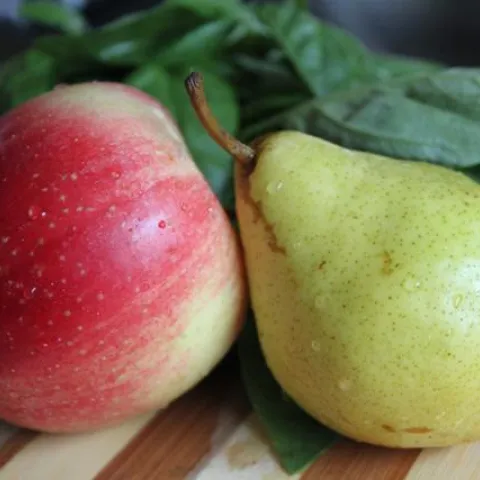
Apples and pears have a long and distinguished history in El Dorado County agriculture. Locals and tourists alike appreciate our fine mountain autumn fruit. Right now, it's late in apple and pear season here in Camino, and most of the fruits will be gone once the main attraction becomes Christmas trees. While apples store well, fresh mountain pears will no longer be available.
Enjoy the autumn harvest all year long
The following recipe is a mixed-fruit jam that will provide you with reminders of the autumn season all year long. Make sure to use liquid pectin for this recipe.
Pear-Apple Jam
Yield: About 7 to 8 half-pints
2 cups peeled, cored, and finely chopped pears (about 2 lbs)
1 cup peeled, cored, and finely chopped apples
61⁄2 cups sugar
1⁄4 tsp ground cinnamon
1⁄3 cup bottled lemon juice
6 oz liquid pectin (2 pouches)
- Prepare boiling-water canner or atmospheric steam canner. Heat jars in canner until ready to use, do not boil. Wash lids in warm soapy water and set aside with bands.
- Wash apples and pears under cold running water, drain.
- Peel and core pears. Crush well and measure 2 cups into a large saucepan. Peel and core apples. Finely chop 1 cup of apples. Add apples to pears and stir in cinnamon.
- Thoroughly mix sugar and lemon juice into fruits and bring to a boil over high heat, stirring constantly.
- Immediately stir in pectin.
- Bring to a full, rolling boil and boil for 1 minute, stirring constantly.
- Remove from heat and quickly skim off foam.
- Fill a hot half-pint jar, leaving ¼-inch headspace. Remove air bubbles. Clean jar rim. Center lid on jar and adjust band to fingertip tight. Place jar in canner with simmering water (180 degrees F). Repeat until all jars are filled.
- Water must cover jars by one inch in boiling water canner or come to the base of the rack in a steam canner. Adjust heat to medium-high, cover canner, and bring water to a rolling boil in a boiling-water canner or until there’s a steady stream of steam coming from the steam canner for 1 minute. Start timing and process pint jars: 10 minutes at 0 – 1,000 feet elevation, 15 minutes at 1,001 – 6,000 feet, and 20 minutes at 6,001 – 8,000 feet.
- Turn off heat. For boiling water canner, remove lid and let jars stand 5 minutes. For atmospheric steam canner, let canner sit undisturbed for 5 minutes, then remove lid. Remove jars and cool 12-24 hours. Check seals (they should not flex when center is pressed). Label, date, and store in a cool dark place.
This delicious jam can be used on toast, of course, but also in yogurt, on pancakes, or as a glaze on roast poultry. Put it out on a charcuterie board with a soft cheese and crackers for a tasty treat during the holidays.
The UC Master Food Preservers of El Dorado County are a great resource for answers to your food safety and preserving questions. Please find our Ask a Master Food Preserver survey in the link below.
This article, written by UC Master Food Preserver of El Dorado County Monique Wilber, originally appeared in the Mountain Democrat in 2014. It was updated by Laurie Lewis in October 2025. The source of the recipe is PennState Extension (2023).
Central Sierra: Saving the Last of the Zucchini (Until you can appreciate it again)
Preserve It! Oh Dear, the Zucchini!
Pickling is one of the oldest methods of food preservation. Queen Cleopatra attributed her legendary beauty as well as her health to the pickles in her diet. Roman troops were given pickles in their diet believing it would make them strong.
What if you don’t have many pickling cucumbers? No problem. Make some sweet, tangy pickles with all those zucchinis you can’t give away this time of year. These pickles make a wonderful addition to your charcuterie board for the holidays.
This recipe hails from National Center for Home Food Preservation (NCHFP), University of Georgia.
Bread and Butter Zucchini Pickles
Yield: About 8-to-9-pint jars
16 cups sliced zucchini squash (or other summer squash or cucumbers)
4 cups thinly sliced onions (about 1 ½ pounds medium onions)
½ cup pickling or canning salt
4 cups white vinegar, 5% acidity
2 cups sugar
2 teaspoons ground turmeric
2 Tablespoons celery seed
4 Tablespoons mustard seed
Slice zucchini into rounds, one-quarter-inch thick. Slice onions into one-quarter-inch thick slices. Place sliced vegetables in a large flat glass or plastic container. Cover sliced vegetables with one inch of water and the salt. Let stand for two hours. Add ice cubes over the top, if desired.
Meanwhile, prepare boiling-water canner or atmospheric steam canner. Heat cleaned jars in canner until ready to use, do not boil (simmering water at 180 degrees F). Wash lids in warm soapy water and set aside with bands.
Drain vegetables thoroughly after the two hours. Rinse vegetables in cool water if you desire a less salty product.
Bring spices, sugar, and vinegar to a boil in a large stainless-steel saucepan. Add the sliced vegetables to the spice/vinegar mixture. Bring the mixture to a boil. Simmer for five minutes.
Pack zucchini and onions into a hot jar, leaving half-inch headspace. Remove air bubbles and adjust headspace, if necessary. Clean jar rim. Center lid on jar. Screw band down until resistance is met, then increase to fingertip tight. Place jar in canner. Repeat until all jars are filled.
Water must cover jars by at least one inch in boiling water canner or come to the base of the rack in a steam canner. Adjust heat to medium-high, cover canner, and bring water to a rolling boil in a boiling-water canner or until there’s a steady stream of steam coming from the steam canner for 1 minute. Start timing and process half-pint jars: 10 minutes at 0 – 1,000 feet elevation, 15 minutes at 1,001 – 6,000 feet, 20 minutes at 6,001feet and above.
Turn off heat. For boiling water canner, remove lid and let jars stand five minutes. For atmospheric steam canner, let canner sit undisturbed for 5 minutes, then remove lid. Remove jars and cool on a toweled surface 12-24 hours. Check lids for seal (they should not flex when center is pressed). Label, date, and store in a cool dark place.
The UC Master Food Preservers of El Dorado County are a great resource for answers to your food safety and preserving questions. Use our "Ask a Master Food Preserver" tool to submit your question and a volunteer will get in touch with you ASAP.
This article by UC Master Food Preserver Laurie Lewis originally appeared in the Mountain Democrat.
Central Sierra: Think Georgia Produces the Most Peaches? Think again!
Preserve It! Peaches!
Don't Hesitate to Buy Loads of Fuzzy Peaches (in season!)
Have you noticed that fresh peaches have more fuzz than peaches in grocery stores? Before peaches are sold in grocery stores, some of the fuzz is removed to make it more appealing. It is thought that too much fuzz on a peach might look like mold to consumers. Why do peaches have fuzz? It is believed that the fuzz repels extra moisture outside of the fruit and helps trap moisture inside the fruit, keeping it from drying out.
While one might think of the state of Georgia as the peach state, California is the largest producer of peaches in the country. Living so close to peach orchards in the Placerville area, it’s easy to over-purchase, coming home with more fresh fruit than can be eaten right away. Don’t fight the urge. Just can up some peaches in syrup, freeze some for pies this winter, or make the recipe below. This recipe comes from The All New Ball Book of Canning and Preserving, 2023. This would be delicious as a glaze over a grilled or roasted meat or on some fresh out-of-the-oven English muffins.
Peach-Ginger Butter
Makes about six half-pint jars
10 cups coarsely chopped fresh peaches (about 12 medium)*
½ cup water
½ cup finely chopped crystallized ginger
2 tsp lemon zest
2 Tbsp bottled lemon juice
3 cups sugar
Combine first five ingredients in a six-quart stainless steel pot. Bring to a boil over medium-high heat, stirring often. Reduce heat, and simmer, uncovered, 15 minutes or until peaches are tender, stirring occasionally. Remove from heat and let cool slightly.
Pulse peach mixture, in batches, in a food processor until almost smooth. Pour each batch into a large bowl.
Return peach puree to stainless steel pot; stir in sugar. Bring to a boil over medium heat, stirring until sugar dissolves. Cook stirring constantly, 25-30 minutes or until mixture thickens and holds its shape on a spoon.
Meanwhile, prepare a boiling-water canner or atmospheric steam canner. Heat cleaned jars in canner until ready to use, do not boil (simmering water at 180 degrees F). Wash lids in warm soapy water and set aside with bands.
Ladle peach puree into a hot jar, leaving one quarter-inch headspace. Remove air bubbles and adjust headspace, if necessary. Clean jar rim. Center lid on jar. Screw band down until resistance is met, then increase to fingertip tight. Place jar in canner. Repeat until all jars are filled.
Water must cover jars by one inch in boiling water canner or come to the base of the rack in a steam canner. Adjust heat to medium-high, cover canner, and bring water to a rolling boil in a boiling-water canner or until there’s a steady stream of steam coming from the steam canner. Start timing and process half-pint jars: 10 minutes at 0 – 1,000 feet elevation, 15 minutes at 1,001 – 3,000 feet, 20 minutes 3,001 – 6,000 feet, 25 minutes 6,001 – 8,000 feet.
Turn off heat. For boiling water canner, remove lid and let jars stand five minutes. For atmospheric steam canner, let canner sit undisturbed for three to five minutes, then remove lid. Remove jars and cool on a toweled surface 12-24 hours. Check lids for seal. Label, date, and store in a cool dark place.
*Note: Should not use white-flesh peaches, as the pH of these are not acidic enough for safe canning.
The UC Master Food Preservers of El Dorado County are a great resource for answers to your food safety and preserving questions. Email us at edmfp@ucanr.edu. For more information about our program, events, and recipes, visit our website at ucanr.edu/sites/mfp_of_cs/. Find us on Facebook, too (UCCE Master Food Preservers of El Dorado County)!
This article originally appeared in the August 06, 2025 Mountain Democrat and was written by UC Master Food Preserver Laurie Lewis.
Central Sierra: Properly Prepare for Pepper Season (EDC MFP)
Preserve It! Properly Prepared for Pepper Season
by UCCE Master Food Preserver Laurie Lewis
The heat of summer in California is in full swing. We are in the height of the season for growing peppers. If you enjoy peppers, or if you grow them in the garden, you may be looking for ways to enjoy the abundance of peppers that surrounds us.
Peppers were ancient currency
Hot as well as sweet peppers have been grown for thousands of years in Central and South America. Did you know that the Aztecs had at least seven different words for hot pepper or that the Incas used peppers as currency?
Sweet and spicy is the perfect combination
Now, let’s change gears and think about the part of our country that produces maple syrup. It takes sunny, warm days and below-freezing nights to have the maple sap running. Native Americans used maple sugar as a source of food as well as a trading item.
If we combine the wonders of our Northeast (maple syrup) and Southwest (peppers) we come up with a spectacular recipe from the Ball Blue Book Guide to Preserving, 38thedition, 2024. Try this recipe over a block of cream cheese or spread on a hamburger (sop up the pickled juices into that bread).
Maple Pickled Jalapeños Recipe
Makes about 4 pint jars
2 ½ to 3 pounds jalapeño peppers, sliced*
1 large red onion, thinly sliced
1 cup sugar
3 teaspoons salt
2 teaspoons mustard seeds
2 teaspoons black peppercorns
3 cups cider vinegar, at least 5% acidity
1 ½ cups water
1 cup maple syrup
Prepare boiling-water canner or atmospheric steam canner. Heat cleaned jars in canner until ready to use, do not boil (simmering water at 180 degrees F). Wash lids in warm soapy water and set aside with bands.
Wash peppers under cold running water; drain. Cut stem and blossom ends off peppers. Cut peppers crosswise into one-quarter-inch slices. Peel onion and remove root and stem ends. Cut onion crosswise into thin slices; separate slices into rings.
Combine sugar, salt, mustard seeds, peppercorns, vinegar, water, and maple syrup in a medium saucepan. Cook mixture over medium heat, stirring until sugar dissolves. Simmer five minutes. Stir in peppers and onions; simmer five minutes.
Pack hot vegetables into a hot jar, leaving one-half-inch headspace. Ladel hot liquid over vegetables, keeping one-half-inch headspace. Remove air bubbles and adjust headspace, if necessary. Clean jar rim. Center lid on jar and adjust band to finger tight. Place jar in canner. Repeat until all jars are filled.
Water must cover jars by at least one inch in boiling water canner or come to the base of the rack in a steam canner. Adjust heat to medium-high, cover canner, and bring water to a rolling boil in a boiling-water canner or until there’s a steady stream of steam coming from the steam canner. Start timing and process half-pint (or pint) jars: 15 minutes at 0 – 1,000 feet elevation, 20 minutes at 1,001 – 3,000 feet, 25 minutes at 3,001 – 6,000 feet, 30 minutes at 6,001 – 8,000 feet.
Turn off heat. For boiling water canner, remove lid and let jars stand 5 minutes. For atmospheric steam canner, let canner sit undisturbed for three to five minutes, then remove lid. Remove jars and cool on a toweled surface 12-24 hours. Check lids for seal (they should not flex when center is pressed). Label, date, and store in a cool dark place.
*When cutting or seeding hot peppers, wear rubber gloves to prevent hands from being burned.
Enjoy peppers this pepper season!
The UC Master Food Preservers of El Dorado County are a great resource for answers to your food safety and preserving questions. Email us at edmfp@ucanr.edu. For more information about our program, events, and recipes, visit our website at https://ucanr.edu/sites/mfp_of_cs/. Find us on Facebook, too (UCCE Master Food Preservers of El Dorado County)
This article first appeared in the Mountain Democrat on July 2, 2025