
Windows
Wildfires can spread from the outside to the inside of buildings when windows break. Glass, the most vulnerable part of the window, can break when exposed to extreme heat, either radiant or from flame contact, or when wind-blown debris impacts the window. Whether a window's glass breaks (or combustible siding ignites) will also depend on the exposure time.
In vinyl windows with separators (interlocks), gaps can develop between the separator and the glass unit at low radiant exposures. As a result, embers or flames may enter the building through these gaps. Studies have shown that this deformation won't occur if the separator has an aluminum cross piece (inner). These reinforcement members are often included in vinyl windows for a variety of reasons (for example, to resist wind loads, allow hardware attachment, or to prevent break-ins).
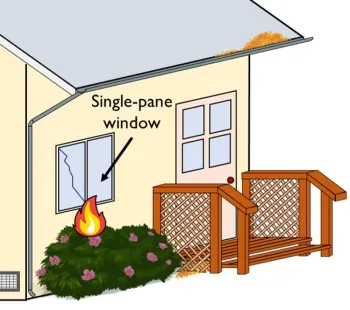
Diagram illustrating potential vulnerabilities of windows to wildfire.
Below is a list of examples of window failures during wildfires.
Window Example | Description of Failure |
Double Pane Annealed Glass Window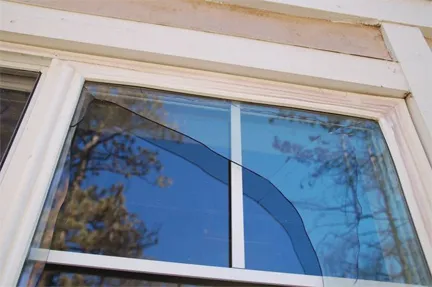
|
|
Dual Pane Window in a Fire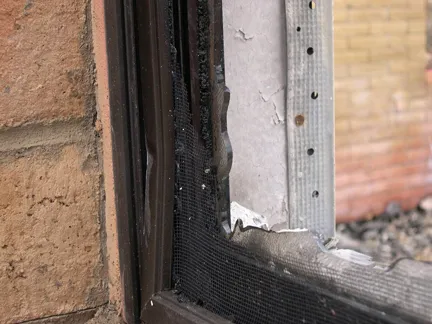
|
|
Vinyl Frame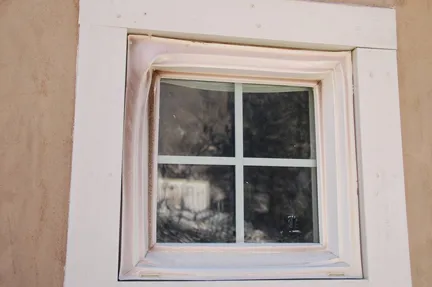
|
|
How Can You Protect Your Windows?
Windows should be protected from prolonged exposure to radiant heat and flames. This also includes glass elements on doors and garages.
- Remove all vegetation and combustible materials away from windows: this can prevent or reduce long-term radiant heat exposure and possible ember entry.
- Confirm your vinyl windows have a vertical or horizontal reinforcement bar.
- Install shutters: this will provide some level of protection against debris and radiant heat. This is recommended if your home is within 30 feet of a neighbor's home or building.
- Replace single pane windows with double pane windows: a multi-pane window can perform significantly better when equipped with tempered glass, which is much more resistant than annealed (regular) glass. Even one tempered pane can improve fire resistance.
- To determine whether or not you have tempered glass, look for a small label in a corner of the window.
Close all windows and skylights before you evacuate: this can help prevent ember entry. If you have time, cover your windows with plywood panels.
California Regulations
Chapter 7A of the California Building Code allows the use of any framing material. According to Chapter 7A of the California Building Code, glass in a window can comply in any one of the following ways:
- By being part of an insulating glass unit with a minimum of one pane being tempered glass. The tempered member can be either the inner or outer pane, or
- Be constructed of glass block units, or
- Have a fire-resistance rating of not less than 20 minutes (test NFPA 257), or
- Meet the performance requirements of SFM Standard test method 12-7A-2.
The first two options for compliance are prescriptive. Currently, building code requires tempered glass for windows in or immediately adjacent to doors, and in windows that are 18' or less from a floor. Chapter 7A requires one of the panes in all dual pane windows to be tempered. The third and fourth options are performance tests. During these tests, a window is subjected to a radiant heat flux or a flame impingement exposure.
Products and assemblies that have complied with Chapter 7A can be found in the WUI Product Handbook.