UCANR

Tips & Techniques

Tips and Techniques
Image
vegetables
Leigh Skomal, Unsplash

Edible gardens are a world unto themselves in the landscape. There are many strategies unique to vegetable gardens that extend growing times, keep the garden healthy, and maximize crop yields. Here's a cheat sheet of common edible garden lingo and strategies. 

Succession garden

Think of a succession garden as a master plan for the garden from season to season. For instance, in June, you can plan to clear some spring vegetables and plant summer crops. Or you can sow and transplant alongside waning spring vegetables with a view to next season's produce. 

Succession planting

The primary purpose of succession planting is to provide continuous crop output within the season by sowing seed of a given crop at 1 to 2 week intervals. For instance, you can stagger corn production by making a subsequent planting when the first is 1 to 2 inches tall. Beans, turnips, seasonal lettuce, and beets are well-suited to this practice. 

Companion planting
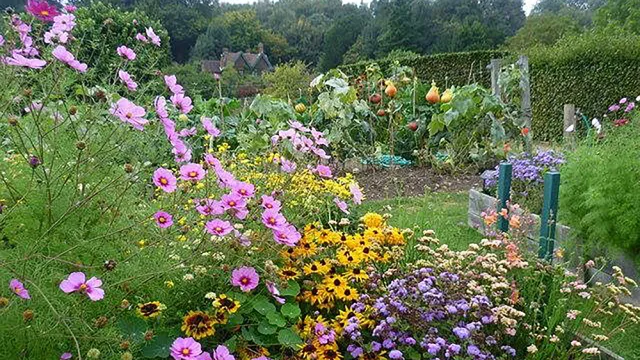
Mix flowering plants into your vegetable garden to invite pollinators and other beneficial insects. Creative Commons

Companion plants like aromatic herbs or flowers are purported to repel pests in the vegetable garden. Although there is a lack of science behind companion planting, growing a wide variety of pollinator-friendly herbs alongside edible crops does help attract beneficial insects and natural enemies. 

Intercropping 

This involves planting early maturing crops between rows of late maturing crops to increase production in a small area. For example, beans, radishes, green onions, or seasonal leaf lettuce may be planted between rows of tomatoes, peppers or corn.  The quicker-maturing plants will be harvested before the others become large. 

Crop rotation

Crop rotation is the practice of changing the location of edible crops from year to year. Rotating crops in the garden enhances soil fertility and lowers risk of pests and diseases. Backyard gardeners with limited space should at least avoid planting exactly the same crop or crops from the same plant family year after year in the same part of the garden. For example, do not follow melons with cucumbers or squash, and do not plant peppers, eggplant, or potatoes where tomatoes grew the year before.

Cold frames
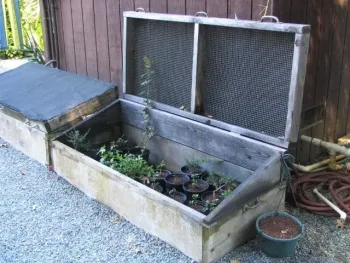
A cold frame provides protected space for spring seedlings. Sandy Metzger

Like mini-greenhouses, cold frames are structures that create a stable environment for frost-tender seedlings by protecting them from big temperature swings. Keeping delicate seedlings in cold frames helps them thrive until winter temperatures stabilize. Cold frames also work to protect seedlings from pests, including birds, cutworms, earwigs, slugs, and snails. Cold frames are easy to assemble and can be made from inexpensive or recycled materials. Because they are better acclimated from the outset, plants that start life in cold frames often do not experience the transplant shock that many plants face. Among the most transplant-vulnerable seedlings are basil, beans, cabbage-family plants, lettuce and peas. 

To make a standalone cold frame: 
• Place an old window pane or a rigid sheet of plastic on top of a four-sided box filled with soil. 
• Be sure that the box receives plenty of sunlight. 
• The box can be made out of any material that holds the soil in place, including wood, straw bales, metal, cinder block, or brick. 
• If you want to reuse your cold frame every winter, consider adding a hinge to one side so you can easily open and close it.
 

Floating row covers
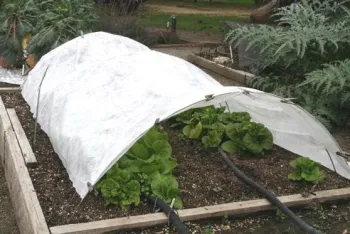
Floating row cover. Courtesy UC Regents

Floating row cover is a white, lightweight, synthetic fabric with a gauze-like appearance. Air, sunlight, and water can penetrate the material. Vegetable gardeners drape it over and enclose individual plants or groups of plants and secure it to the ground with pins, bricks, rocks, soil, etc. The cover “floats” directly on top of the growing crop. Some gardeners install simple frames to support floating row covers, creating a dome effect. Row covers are often used in the winter to protect plants from frost, and in summer to provide some shade. 

Floating row covers provide many benefits:
• Provides frost protection in early spring and late fall/early winter
• Encourages faster plant growth due to increased temperature and humidity under the cover
• Prevents insects, deer, birds, and other pests from eating your plants
• Inexpensive
• Reusable: can be re-used for two to three years


BACK TO EDIBLES
> What Edible Gardens Need
> Best Choices for Marin
> How to Prepare
> How to Plant
> Edibles in Containers
> Planting Calendar
> Grow & Care Sheets for Vegetables, Herbs & Fruits
> Tips & Techniques
> How to Maintain
> Fruit Trees
> Top 20 Edible Garden Problems
> Cover Crops & Soil Enhancements in the Off-season
> Conserving Water

•••••••••

Visit our EDIBLE DEMO GARDEN at IVC Organic Farm & Garden


News from the Edible Demo Garden

Seasonal Advice and Happenings at our Edible Demonstration Garden

Every month, the team at the Edible Demonstration Garden chronicles what's happening in the garden - planting, harvesting, problems and more. Check out our stories!

> BACK TO THE EDIBLE DEMO GARDEN


Growing Lettuce Year-Round

Primary Image
A harvest of crisp, bright green lettuce is satisfying anytime of the year
Body

Lettuce is generally considered to be a cool-season annual, but with a little advanced planning and some judicious plant selection, Marin gardeners can enjoy home-grown lettuce throughout the year. Our temperate climate makes it possible to modify the growing conditions for lettuce and enable the plants to thrive in all seasons. That’s good news for salad lovers!

A harvest of crisp, bright green lettuce is satisfying anytime of the year

EXTERNAL IMAGE

Seasonal Challenges for Growing Lettuce

Lettuce grows best in 45-to-73-degree temperatures. Heat above 80 degrees causes most varieties to bolt (produce flowers) and become bitter. Temperatures below freezing often result in plant damage. Additionally, the shorter winter daylight hours slow or pause growth.

Volunteers in the Edible Demo Garden like a challenge, so learning how to grow a steady crop of lettuce in every season was an ideal project. Lettuce has become a popular crop at the Indian Valley Organic Farm & Garden. Although the success of the project was evident quantitatively in the over 260 heads of lettuce harvested since July 1, 2025, the qualitative gains, in terms of knowledge and experience, are immeasurable. Some key strategies identified for lettuce growing success include selecting the best varieties, succession planting, and managing environmental conditions.

Selecting the Best Varieties

Lettuce varieties are divided into four categories: crisphead, butterhead, looseleaf, and romaine. Crisphead is the iceberg lettuce found in grocery stores. It takes longer to develop and is difficult to grow in hot climates. It’s not a popular choice for home gardeners and is not a variety grown at the Edible Demo Garden.

Butterhead lettuce, also called bib lettuce, is more heat-tolerant. Varieties of butterhead that have thrived in the Edible Demo Garden are ‘Red Cross’ and ‘Aunt Mae’s Bibb’. Both are heat-tolerant and slow to bolt. ‘Red Cross’ has bright red and green leaves making it especially appealing in summer salads.

Loose-leaf lettuces include the “cut and come again” varieties with different leaf shapes, some described as oak leaf-shaped. They can be harvested by taking the outer leaves and leaving the central leaves to mature for future picking. ‘Smile’ is a bright green oakleaf variety that has performed particularly well in the Edible Demo Garden. Other loose-leaf varieties grown in the garden are ‘Morgana’ and ‘Bijella’. ‘Muir Summer Crisp’ is a dense, wavy-leafed variety that is exceptionally heat-tolerant and slow to bolt. 

Romaine lettuce, such as ‘Little Gem’ also grows well in the Edible Demo Garden but takes longer to mature and is not as heat-tolerant as other types. As a result, it is not as productive in the garden as the butterhead and loose-leaf varieties.

Succession Planting

Sow lettuce seeds indoors to germinate for succession planting

A year-round lettuce harvest requires always having lettuce growing in different stages. That means starting seeds indoors or direct sowing in beds at the same time mature lettuce is being harvested. A volunteer day in the Edible Demo Garden might involve sowing lettuce seeds in cells to germinate in the greenhouse, planting the starts that are now ready in the garden beds, and harvesting the fully grown heads of lettuce for distribution in community-supported agriculture boxes. Intervals for succession planting vary according to the crop, but sowing seed every two weeks is about right for lettuce.

Managing Environmental Conditions

Lettuce requires proper watering and protection to thrive. Frequent, light watering is important for shallow-rooted lettuce. Too little water will stunt and toughen the plants, and too much water causes root rot. Mulching around the plants helps maintain moisture and keeps the leaves off the ground.

Lettuce seedlings need water and protection in outdoor garden beds

Protection from heat and pests can be challenging. Lettuce appreciates some shade in the summer, so planting it next to taller plants or using shade cloth can reduce the chances of it bolting. Animals and insects love lettuce too. In the Edible Demo Garden, lettuce beds are covered in protective netting to deter hungry birds, rabbits, and other critters. Mesh wire is placed under the beds to stop invasions from below. Even that didn’t prevent gophers from tunneling through the wood on the side of one of the beds and feasting on a few heads of lettuce. The protective netting also provides some shelter from the sun and flying insects. Aphids, earwigs, and slugs can still be a problem, so it pays to be vigilant and remove them as soon as they are discovered.

Click here for more information on growing lettuce:

https://ucanr.edu/site/uc-marin-master-gardeners/documents/lettuce

Check out our new YouTube video:


UC Marin Master Gardeners
Primary Image
Bank vole
UC Marin Master Gardeners: Article

July 2025: Vole Invasion

July 16, 2025
By Linda Stiles
July 2025: Vole Invasion Protecting the growing plants from hungry critters is an ongoing challenge in the Edible Demo Garden. Wire mesh is used extensively under planting beds and around the straw bales to discourage gophers. Yards of protective netting keep the birds and rabbits from eating young…
View Article

June 2025: Patio Gardening

Primary Image
Patio gardening
Body
Image
Patio gardening
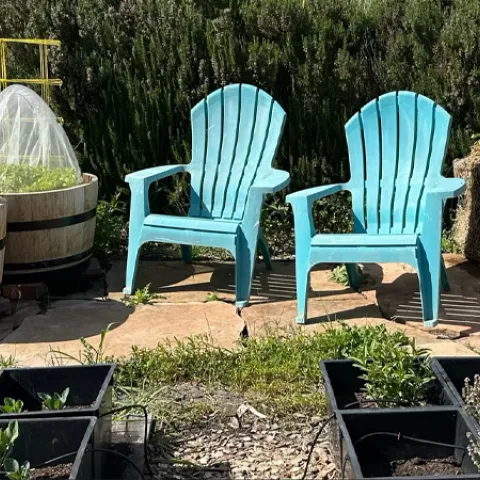
The new “patio” space in the Edible Demonstration Garden

This past month EDG volunteers created a small “patio” in the garden to demonstrate how edibles can be successfully grown in limited space. Too often gardeners are discouraged from growing edibles, believing that it takes a large back yard with room for long rows of plants. However, with the imaginative use of containers even a small deck, patio, or balcony can be converted into flourishing garden.

What are the basic requirements for growing edibles in small spaces?

Straw bale gardening
A straw bale is a container for growing squash in the “patio” garden

Sun – Edibles need 4 to 6 hours of sunlight. Regardless of the size of the growing area, sun exposure is essential. Leafy crops such as lettuce and chard require at least 4 hours of sun per day and fruiting crops like tomatoes, melons, and beans need at least 6 hours of sunlight daily. It’s important to choose the sunniest spot on a deck or patio for an edible garden area.

Water Container plants need water more often than those grown in the ground. The need to transport water to growing plants with buckets or watering cans can diminish the pleasure in growing edibles. While drip irrigation is ideal, a hose attached to a water source will suffice.

Containers – The possibilities for garden containers are numerous and range from commercial pots, planters, troughs, and bags to the creative repurposing of old pans and buckets, wooden crates, wheelbarrows, and, of course, wine barrels. A used filing cabinet with the drawers removed can make a great container for edibles. In the Demo Garden, a straw bale provides a patio container for yellow fin squash. Regardless of the type of container, good drainage is important so it may be necessary to drill holes to allow water to flow through easily.

Grow bag container
Grow bags make handy portable containers for edibles in small spaces


Containers need to be deep enough to provide sufficient space for root growth. Depth requirements vary with the type of crop. Salad greens and some herbs can grow in 6- to 10-inch-deep containers while peas, eggplant, and peppers need at least 14 to 16 inches to develop a strong root system. Tomatoes in containers require a minimum soil depth of 18 inches.

Soil – The potting mix used in containers should be porous and fast draining, yet moisture retentive. A high-quality mix that contains compost and other organic matter is best. Garden soil is too heavy, difficult to keep evenly moist, and can harbor disease. Organic fertilizers should be added in frequent but light amounts as the watering that container plants require leaches nutrients from the soil.

Additional tips for small space edible gardening

Vertical gardening
When space is limited, think vertically
Credit: PickPik

Take advantage of vertical space – Trellises and stakes help tall and vining plants to grow upward. Use walls or fences as additional planting space by adding shelves, racks, or hanging baskets. A recycled step ladder is an inexpensive vertical gardening option. 

Avoid damage to structures – Use blocks or bricks under containers to prevent rotting wooden decks or stairs. Consider the weight of the soil and container when planting on a balcony.

Protect against animals and pests – Plants in containers are susceptible to the same pests as in-ground plants. Cages or netting might be necessary to protect against birds, squirrels, and other critters.

Don’t forget the pollinators – Adding a few flowering plants to a container garden can help to attract pollinators to the edibles and increase veggie and fruit production.
 

Click here for more information on growing edibles in containers.

UC Marin Master Gardeners

May 2025: Drip Irrigation Troubleshooting

Primary Image
Plastic tubbing of drip irrigation system
Body
Drip irrigation at plant's soil level
Drip irrigation delivers water at soil level where it can more easily reach plant roots

When the winter rains end, it’s time for gardeners to focus on providing spring and summer edibles with the water they need to grow and produce. While hand watering may be the simplest way to adjust watering to the needs of individual plants, it’s not the most efficient means for getting the right amount of water to an entire garden.

Drip irrigation has proven to be the best option for home gardeners. It is particularly suitable for edible gardens because it delivers the water at the soil level and avoids water on the plant leaves which can lead to problems with mold and mildew. 

Plastic tubbing of drip irrigation system
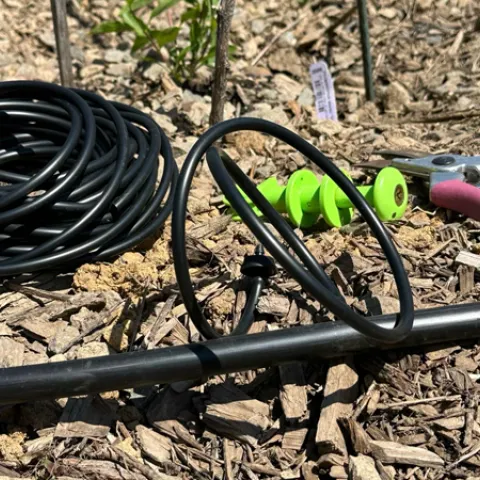
Drip irrigation uses a network of plastic tubing to carry a low flow of water to plants

Drip irrigation is also waterwise, reducing loss by evaporation and runoff and maintaining a desirable balance of air and water in the soil through slow application of water to plant roots.

What can go wrong with drip irrigation?

Whether installed by professionals or as a do-it-yourself project, drip irrigation requires routine maintenance. It’s recommended that the lines be checked monthly when the system is operating. It is especially critical when the drip irrigation is first turned on in the spring. Here are some common problems to look for:

  • Leaks. The dreaded geyser is a sure sign that there is a break in the line somewhere. It could be a dislodged emitter or a damaged line. Thirsty rodents like to chew on the tubing and lines can be unintentionally broken by shovels and spades.
Image
Digging to find leak in buried irrigation tubing
Finding the source of an irrigation leak can require some digging.

Finding a wet spot where there is no emitter can signal a problem in the supply line. If the line is buried, it will take some digging to find the leak. This was a recent problem in the Edible Demo Garden. The drip irrigation was installed some time ago and it was unclear which lines led to which bed. The search for this particular leak is still continuing.

  • Blocked lines and emitters. Lines may get clogged, and emitters can be plugged by debris, mineral buildup, and algae. Pinched lines, especially the smaller feeder lines, can also be a problem. Periodically walking the circuit and checking flow from the emitters while the system is running is a good way to spot irrigation problems before plants start showing signs of distress.
  • Low water pressure. Drip irrigation operates at 15-25 pounds per square inch (psi) which is much lower than sprinkler systems which can require up to 50 psi, and household systems running at 50-80 psi. A pressure regulator is needed to reduce the incoming household pressure to that for which the drip systems are designed. However, pressure in the lines can be lowered further by elevation gain, friction in the tubing, and long line lengths. It is recommended that 1/2” supply lines be limited to 200 feet in a single zone and the number of one gallon per hour emitters per line not exceed 200. If a drip emitter at the end of a line is not delivering sufficient water, it could be a low-pressure problem.
Fixing drip problems
Drip irrigation repair kit
An emergency drip repair tool kit keeps supplies handy when needed.

With the right supplies, many common irrigation problems can be easily fixed. An emergency drip repair kit should include spare flow emitters of different sizes, connectors (both straight and elbow), line plugs, end caps, and tubing. It’s also handy to have a tool for cutting tubing, a punch to make holes in 1/2” line, and metal staples for securing the lines. The same supplies are useful when drip lines need to be added for new plants.

Lines can be flushed to remove debris, and clogged emitters can be cleaned or replaced. Small holes in lines can be plugged. Larger damaged sections in lines can be removed and connectors used to join the undamaged sections.

A water pressure test gauge, available at hardware stores, is helpful in determining if the pressure in the drip system is in the right range. Low pressure problems due to overly long lengths of supply line or too many drip emitters might involve changing the drip line layout or adding another zone to the system.

Controlling drip irrigation

Drip systems require control valves to direct water into the system. These are generally automated with an AC or battery powered controller/timer that makes it easy to set irrigation frequency and duration. These devices range from simple timers to more complicated “smart” controllers. All these devices include the option to run the system manually, allowing gardeners to conduct their periodic system maintenance checks.

Click here for more information on irrigation systems.

UC Marin Master Gardeners

April 2025: The Joys of Selecting and Planting Seeds

Primary Image
Seed packets
Body
Image
Seed packets
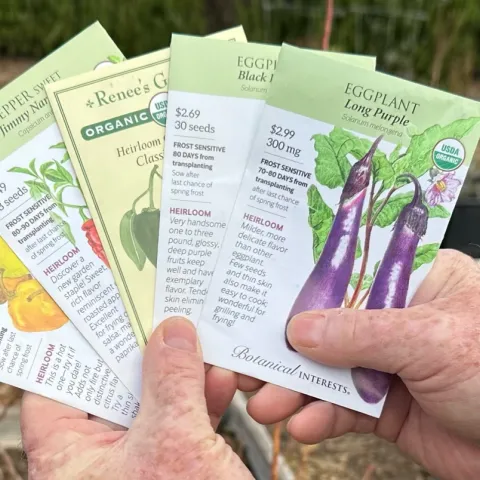
Selecting from the many varieties of certified organic seeds is part of the fun in planning a summer garden.

It’s hard to find a gardener who doesn’t love checking out new seed varieties and anticipating the abundant and tasty harvest they promise. The photos and descriptions are tantalizing and the names intriguing. Who wouldn’t be curious about a pumpkin variety called ‘Abominable’, a pepper named ‘Frodo’, or a tomato tagged ‘Dancing with Smurfs’?  With so many seed varieties to select from, narrowing down the choices can be challenging. In January this year, a team of EDG volunteers had a lot of fun picking out varieties for our spring and summer crops.

How Seeds are Selected

Seed selection starts with a garden plan, taking into consideration the space available for each type of crop. Once decisions are made about which crops to plant and where to plant them, choosing the right varieties becomes the focus. The Demo Garden is the perfect place to try out some of those new and different seed options while continuing to plant those varieties that have proven to be reliable. Planting more than one variety of each crop makes it possible to directly compare them in terms of growth and productivity.

Time to maturity is important in determining which summer crop varieties to plant. The soil must be consistently warm (over 55 degrees) for the time specified in the variety description to produce a crop. The climate in the Indian Valley Organic Farm and Garden where the Edible Demo Garden is located provides a long enough growing time for most summer crops. However, varieties requiring more than 120 days to maturity may not achieve full production before the weather turns cool.

Seeds planted in the Edible Demo Garden must be organic certified. Organic seeds are from plants grown in compliance with federal standards which exclude the use of synthetic fertilizers, pesticides, and genetically modified technologies. Seed choices for the Demo Garden are often based on the descriptions provided by organic seed companies and it’s up to the volunteers to determine which varieties seem well suited for the garden conditions and promise the best taste.

Planting the Seeds
Planting seeds in seed flats
Seeds are planted in flats filled with starting soil mix. Vermiculite is added on top to control moisture.

On February 27th, the new MMG training class got hand-on practice in seed starting. Seeds are planted in a starting soil mix in flats of cells with 2 or 3 seeds per cell. Supervised by EDG volunteers, the trainees planted 60 cells of cucumbers (‘Armenian’, ‘Crystal Apple’, ‘Jin Yang’ and ‘Early Fortune’) and 90 cells of sweet peppers (‘Pusztagold’ and ‘Bacskai Feher’), along with 30 cells of green onions and 72 cells of lettuce. The class will have the chance to take some of the cucumber and pepper starts home to plant in their own gardens where they can assess how well they grow in our different microclimates. The planted seeds are now germinating in the greenhouse.

Seed flats in greenhouse
The controlled light, moisture, and heat in the greenhouse provides the perfect environment for the seeds to germinate.

Starting plants in the greenhouse gives them an advantage and allows better timing for optimum crop production. They are not ready for transplanting outside until they have developed at least one set of true leaves. The first set of leaves to appear are embryonic leaves called cotyledons. They look different from the plant’s typical foliage. True leaves are the more recognizable leaves that develop above the cotyledons. The time required for seedlings to be ready for transplanting varies. Beans can be ready in 3 to 4 weeks while peppers can take more than 8 weeks.

New Varieties in the Demo Garden
Sprouted seedlings
Seedlings are nurtured in the greenhouse until they develop at least one set of true leaves.

EDG volunteers look forward to growing the new seed varieties they have selected for the summer. The seeds have been ordered but not all have been planted. ‘Dancing with Smurfs’, an indigo-colored cherry tomato, along with ‘Altai Orange’ and ‘Woodstock’ are among the new tomato varieties. Two new melon varieties, ‘Sweet Freckles’ and ‘Farthest North Galia’ will be tried in the garden. The ‘Pusztagold’, and ‘Bacskai Feher’ peppers, now germinating in the greenhouse, are small, sweet Hungarian type peppers. Last summer’s pepper crop included an overabundance of hot peppers, so it’s sweet peppers in demand this year.

Starting with seeds is rewarding. There is the pleasure of choosing seeds from the many available varieties and the joy of nurturing them and watching them grow into tiny plants. It’s even better when the veggies and fruits turn out to be as yummy as the seed descriptions promise.


Click here for more information on planting from seeds.

UC Marin Master Gardeners
Primary Image
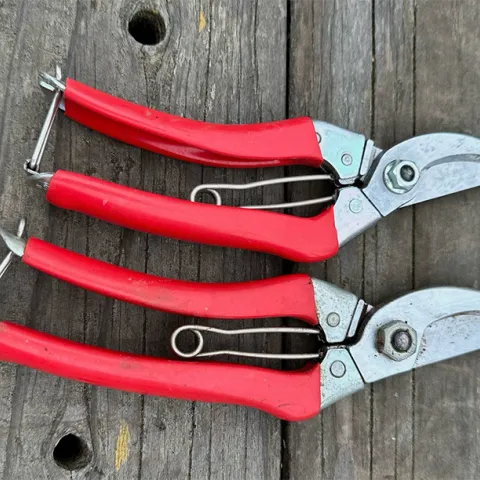
There are many choices in by-pass pruners with models that fit different hand sizes.
UC Marin Master Gardeners: Article

February 2025: Choosing the Right Garden Tools

January 25, 2025
In January, the 2025 Marin Master Gardener training class was welcomed into the Edible Demonstration Garden for a discussion and demonstration on the use and care of garden tools. The right tools make the difference between gardening that is pleasurable and gardening that is a struggle.
View Article
Primary Image
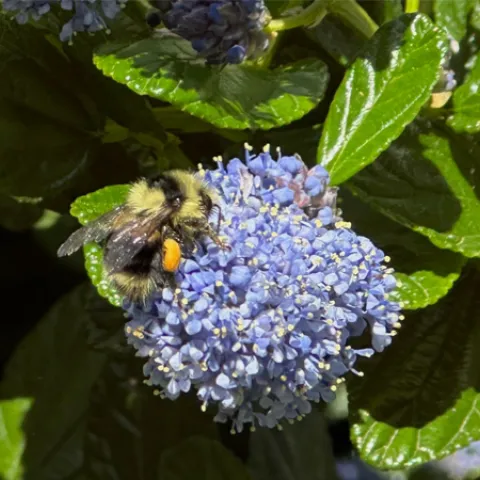
Ceanothus blossoms attract native California bumble bees.
UC Marin Master Gardeners: Article

January 2025: Natives in the Edible Garden

December 19, 2024
Natives are welcome in the Edible Demo Garden. As a joint project with the Native Plant Guild in October 2021, garden volunteers planted a variety of sun-loving, drought-tolerant California natives in a corner of the garden area...
View Article
Primary Image
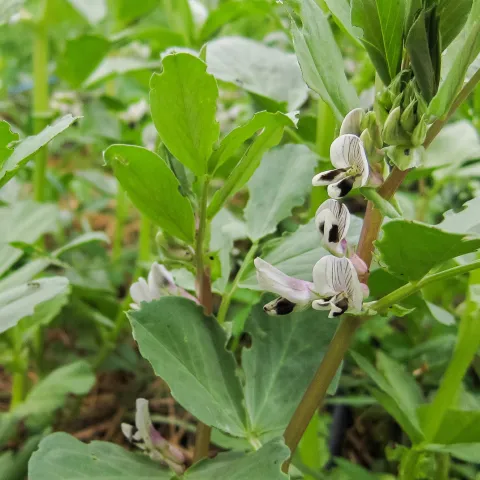
Fava beans are an attractive and popular cover crop due to their nitrogen-fixing effects in the soil. Photo: Flickr
UC Marin Master Gardeners: Article

December 2024: Giving the Garden a Rest

November 22, 2024
After an especially busy summer and fall harvest season, it was time to consider what to plant next in the Edible Demo Garden. In Marin its possible to grow vegetables year-round, however...
View Article

November 2024: Experimenting with Different Tomato Varieties

Primary Image
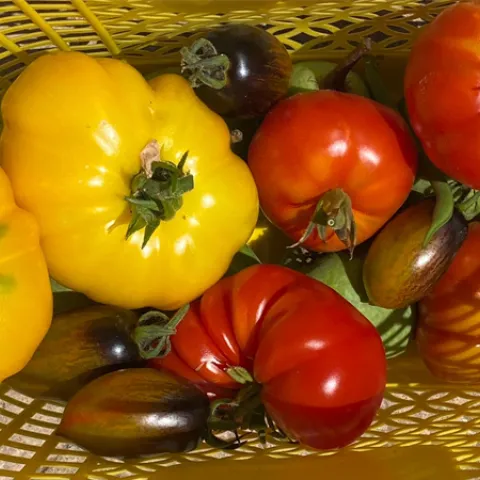
Seven tomato varieties were included in the Edible Demo Garden “Tomato Experiment”. Four are pictured here. Photo by Jenny Chan.
Body

Tomatoes 1

Tomatoes are among the top summer crops in the Edible Demo Garden and each year there are decisions to be made about which varieties to grow. Since there are reported to be over 10,000 varieties of tomatoes, it’s important to narrow down the selection considerably and plant only those varieties that grow well in Marin and are appealing to consumers. However, even within those broad parameters, many choices can be made. The Marin Master Gardeners typically offer sixteen varieties in their annual tomato plant sales. These are the varieties that have proven over the years to be the most popular with customers. Each year one or two new varieties may be offered to replace some that have not fared so well in terms of sales or customer reviews. Choices about new varieties are usually based on members’ recommendations.

The Tomato Experiment

This spring the Edible Demo Garden and the Edibles Guild launched a collaborative experiment to determine which of seven tomato varieties not previously sold in the tomato market, would be most successful in Marin’s different growing conditions. The experiment involved adopting out 132 plants grown in the Indian Valley Organic Farm & Garden greenhouse to 37 Marin Master Gardeners willing to try growing them in their own gardens. The seven varieties were:

Tomatoes 2
  • Costoluto Genovese – a classic red Italian heirloom
  • Bicolor Marvel Stripe – a marbled red and gold heirloom
  • Moonglow – a bright orange heirloom
  • Mortgage Lifter – a large meaty red heirloom
  • Magic Bullet – an elongated cherry-sized open pollinated variety
  • Pink Berkeley Tie Dye – a wine-colored open pollinated variety with green stripes and pink flesh
  • Amish paste – a small bright red heirloom best used for sauces

The tomato adopters agreed to submit data describing their experiences growing the trial tomatoes. They recorded the garden type, location, and microclimate, when the tomatoes were planted, how they were cared for, and when the first tomato was harvested. Then they subjectively rated the tomatoes on yield and taste. Finally, and most importantly, they answered the question – “would you grow this variety again?”.

Which varieties had the best results?

Tomatoes 3
Tomato season isn’t completely over in some areas of Marin and the data are still being collected. However, there are some interesting early results. Magic Bullet, the most unique variety in terms of the appearance of the fruit, had high ratings for yield and taste. It was a big producer in the Edible Demo Garden and sold out quickly at the IVC Farm Stand. Mortgage Lifter also stood out due to the beauty and size of the fruit, one tomato weighing over 1.5 pounds. That variety reportedly earned its name after it was so successful that the original developer was able to pay off his mortgage in six years (that was back in the 1930s). Amish Paste, was a disappointment, ending up at the bottom of the list for yield and taste. The other varieties were rated somewhere in the middle. So far, the majority of the Master Gardeners who grew Bicolor Marvel Stripe, Mortgage Lifter, Magic Bullet, or Pink Berkeley Tie Dye, responded either “yes” or “maybe” to the question about whether they would grow that variety again.

What matters most when choosing tomatoes to plant

One of the most important factors to consider when choosing a tomato variety is the microclimate in the growing location. Tomatoes need sunshine and warm soil. All the experimental tomatoes required temperatures above 65 degrees and some preferred 75 degrees. During a typical spring, in most areas of Marin, around May 1st is when the temperatures are best for planting tomatoes. Tomatoes planted before the air and soil are sufficiently warmed, will sit idly by until the conditions are right. Conversely, tomatoes don’t like extreme heat and will stop production during heat waves like those experienced in parts of Marin this summer.

Linked to microclimate are days to maturity. This is the average time it takes for the first ripe fruit to develop in ideal heat conditions. Magic Bullet, Pink Berkely Tie Dye, and Costoluto Genovese are considered mid-range, requiring 70 to 80 days to mature. The others are late maturers, needing more than 80 days to produce ripe fruit. Bicolor Marvel Stripe takes 95 days to mature. In cool areas of Marin, there may not be enough warm days for some late maturing tomato varieties to reach full production.

Click here for more advice on selecting and growing tomatoes. 


UC Marin Master Gardeners
Primary Image
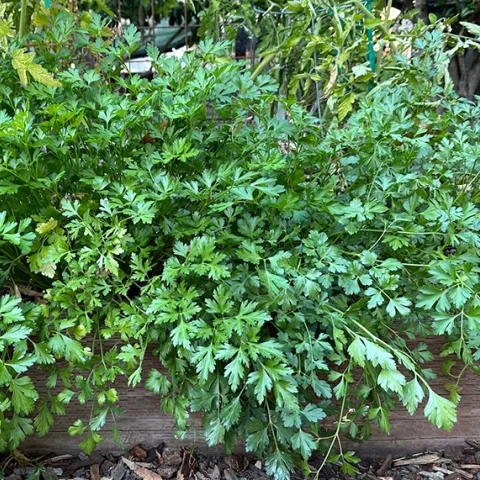
Italian parsley is a popular biennial herb that grows well in sunny, moist garden conditions.
UC Marin Master Gardeners: Article

October 2024: Herbs Among the Edibles

September 25, 2024
Herbs may not be the stars in the Edible Demonstration Garden, but they are notable members of the supporting cast. Its hard to imagine a flourishing vegetable garden without a few culinary herbs as companions.
View Article

Source URL: https://www.ucanr.edu/site/uc-marin-master-gardeners/tips-techniques