Have you ever wondered what to do with leftover wine or perhaps a bottle that didn't quite suit your taste? I know I have been in this predicament a few times. It's a shame to pour it out, so what do you do with it? How about make some wine jelly? The procedure is simple, and it will yield a flavorful product that can accompany a variety of cheeses, meats, and charcuterie boards. Or, if you're like me, enjoy it on a cream scone or slice of sourdough toast with a cup of tea. YUM!
Image
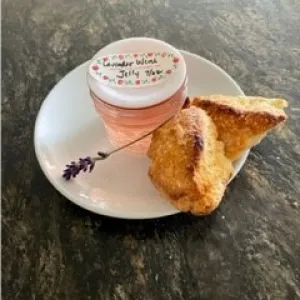
Small plate with a jar of lavender jelly labeled “Lavender Jelly” and two pieces of toasted bread, garnished with a sprig of lavender on a countertop. Photo: Dayna Ravalin
Recently, I opened a bottle of champagne and didn't like the taste so I decided to use it to make wine jelly. I chose the Herbes de Provence Wine Jelly recipe from the Ball® Complete Book of Home Preserving 2012 edition. Since I used champagne instead of still white wine (my champagne was flat) and dried lavender for the Herbes de Provence, the variation I made is called Lavender Wine Jelly.
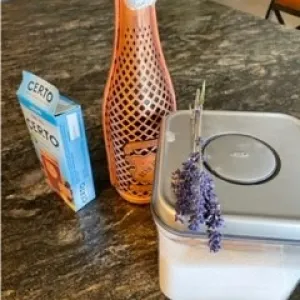
First, before starting any preservation project, make sure your workspace is very clean, including all equipment. Wash your hands with soap and water for at least 20 seconds before you begin. Next, gather your supplies.
Image
Bottle of rosé wine, a box of Certo pectin, and a container of sugar with a sprig of lavender placed on a kitchen counter. Photo: Dayna Ravalin
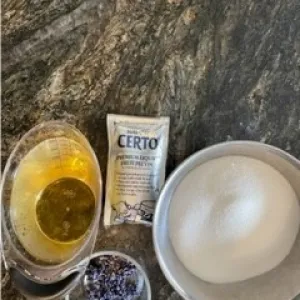
Then, measure your ingredients using appropriate utensils for the job. Use dry measuring tools for non-liquid ingredients and liquid measuring tools for liquids, of course!
Image
Ingredients for jelly making including lemon juice, dried lavender buds, a packet of Certo pectin, and a bowl of granulated sugar on a countertop. Photo: Dayna Ravalin
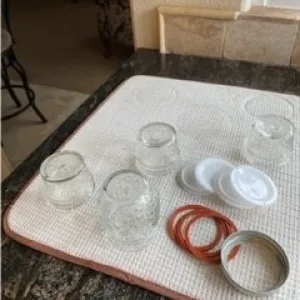
Next, wash all your jars, lids, and rings and prepare them according to the manufacturer's recommendations. As you can see from the photo, I use reusable lids for my canning projects. Single use lids work very well too.
Image
Clean glass canning jars, lids, and rings arranged upside down on a drying mat on a kitchen counter. Photo: Dayna Ravalin
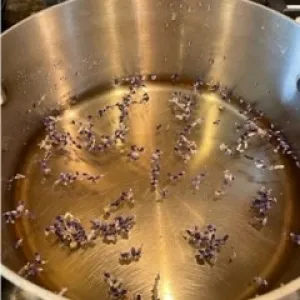
Pour your measured wine into a stainless-steel pot and add the dried culinary lavender.
Note: Make sure the variety of lavender you are using is meant to be used in cooking. Not all lavender is created equally.
Image
Lavender buds steeping in liquid inside a stainless steel pot on a stovetop. Photo: Dayna Ravalin
Bring the lavender and wine to a boil, cover, and remove from the heat and allow to steep for 20 minutes.
Image
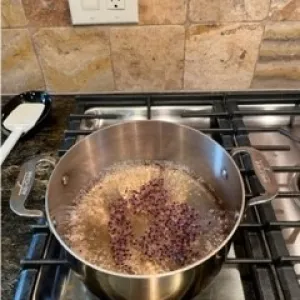
Pot on a stove with lavender liquid and sugar beginning to dissolve and heat. Photo: Dayna Ravalin
After steeping, I transferred the liquid using a strainer lined with several layers of cheesecloth set over a deep bowl and let it drip for several minutes. You can also use a dampened jelly bag for this step. You will need 1 ¾ cups of infused wine. You may need to squeeze the cheesecloth or jelly bag to get enough liquid.
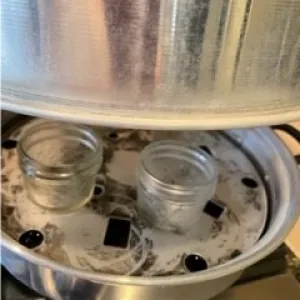
Meanwhile, heat your jars in your atmospheric steam canner or boiling water canner. I use a steam canner, when possible, to minimize the amount of needed water for processing and ease of use. The processing time is the same as for a boiling water canner. Recipes must require less than 45 minutes of processing time and be considered a high acid food in order to be safely canned in an atmospheric steam canner.
Image
Small glass jars being sterilized in a steaming rack inside a pot. Photo: Dayna Ravalin
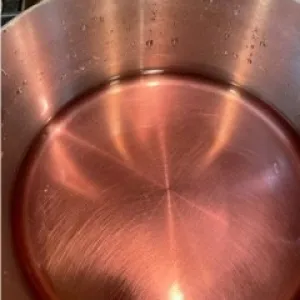
Transfer the steeped wine into a large stainless-steel pot. As you can see, my wine turned a beautiful rose color thanks to the newly dried lavender pigment.
Image
Pot containing a clear pink liquid, likely the jelly mixture, heating on a stovetop. Photo: Dayna Ravalin
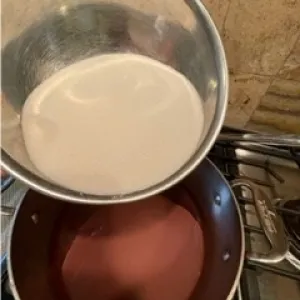
Stir in the sugar all at once.
Image
White sugar mixture being poured into a pot of pink liquid during jelly preparation. Photo: Dayna Ravalin
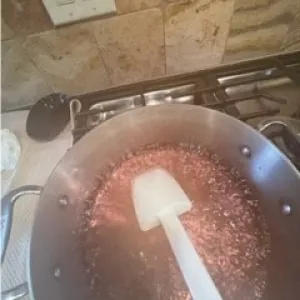
Bring to a full rolling boil that cannot be stirred down and stir in the pectin.
Image
Boiling jelly mixture being stirred with a white spatula as it thickens. Photo: Dayna Ravalin
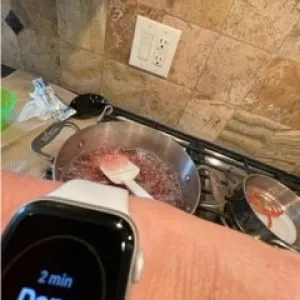
Boil hard for 2 minutes, stirring constantly.
Image
Close-up of a smartwatch showing “2 min Done” with a pot cooking in the background. Photo: Dayna Ravalin
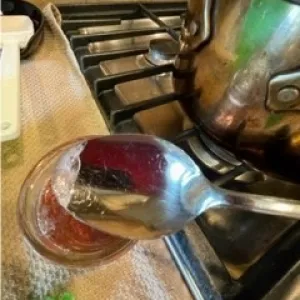
Remove from heat and quickly skim off the foam.
Image
Hot pink jelly being poured from a pot into a small glass jar using a spoon. Photo: Dayna Ravalin
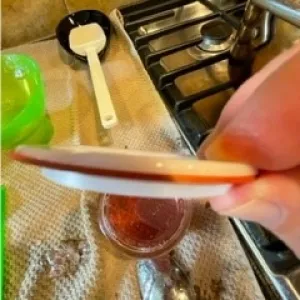
Quickly pour the hot jelly into the hot jars removing air bubbles and adjusting headspace to ¼ inch. Wipe jar rim and lid your jar.
Image
Metal lid being placed onto a filled jar of jelly on a kitchen counter. Photo: Dayna Ravalin
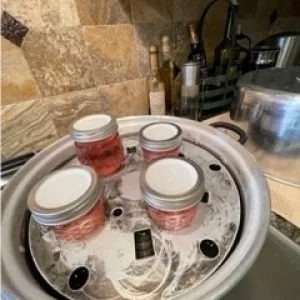
Apply the jar ring and load into the canner.
Image
Four sealed jars of pink jelly sitting on a canning rack inside a pot. Photo: Dayna Ravalin
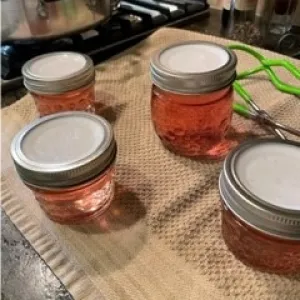
Process these jars in a boiling water canner or atmospheric steam canner for 10 minutes. Remove jars from the canner after the recommended wait time and allow to cool for 24 hours.
Image
Finished jars of pink jelly cooling on a towel on the kitchen counter. Photo: Dayna Ravalin
After 24 hours, check seals, remove rings, and store in a dark cool place. Make sure to place any unsealed jars in the refrigerator to enjoy right away.
This recipe is such fun and doesn't require the longer preparation time that other jelly recipes do. Enjoy this during the upcoming holidays or enjoy now during the warmer months as part of a charcuterie board, or just pair it with a wedge of brie cheese and your favorite cracker. Either way, you'll always want to have some in the pantry! It also makes a great gift!
Recipe:
Lavender Wine Jelly
Ingredients
2 cups dry white wine
1 Tbsp. dried culinary lavender
2 cups granulated sugar
1 pouch (3oz.) liquid pectin
Directions:
In a large stainless-steel saucepan combine wine and lavender. Bring to a boil over high heat. Remove from heat, cover and let steep for 20 minutes.
Transfer to a dampened jelly bag or a strainer lined with several layers of dampened cheesecloth set over a deep bowl. Let drip undisturbed, for 20 minutes. Measure 1 ¾ cups infused wine. If you do not have the required amount, squeeze the bag.
Meanwhile, prepare canner, jars, and lids according to manufacturer recommendations.
Transfer infused wine to a clean, large, deep stainless-steel saucepan. Stir in sugar.
Stirring constantly over high heat, bring mixture to a full rolling boil that cannot be stirred down. Stir in pectin. Boil hard, stirring constantly for 2 minutes. Remove from heat and quickly skim off foam.
Quickly pour hot jelly into hot jars, leaving ¼ inch headspace. Wipe rim. Center lid on jar. Screw band down until resistance is met then increase to fingertip tight, or according to manufacturer directions for reusable lids.
Place jars in canner and process for 10 minutes. Once process is complete, remove jars according to canner type after recommended wait time (5 minutes for boiling water canner), and cool for 24 hours. Label jars with contents and date of preparation and store in a cool, dark place.
UC Master Food Preservers do not endorse or promote any brand of products.